

Beginner’s Guide to Wall Stenciling: Tips, Tools & Easy Projects for Stunning Walls
Everything You Need to Know for a Successful Stencil Project
Wall stenciling is one of the easiest ways to give your home a fresh, stylish update without the expense of wallpaper. With the right stencil pattern some paint, and a few simple tools, you can create stunning stenciled walls that look like high-end designer finishes.
This beginner’s guide to wall stenciling covers everything you need to know — from essential tools and prep work to pro tips and easy first projects. Whether you’re dreaming of a bold accent wall, a nursery makeover, or a subtle tone-on-tone design, wall stenciling is a beginner-friendly DIY that anyone can master.

What Is Wall Stenciling?
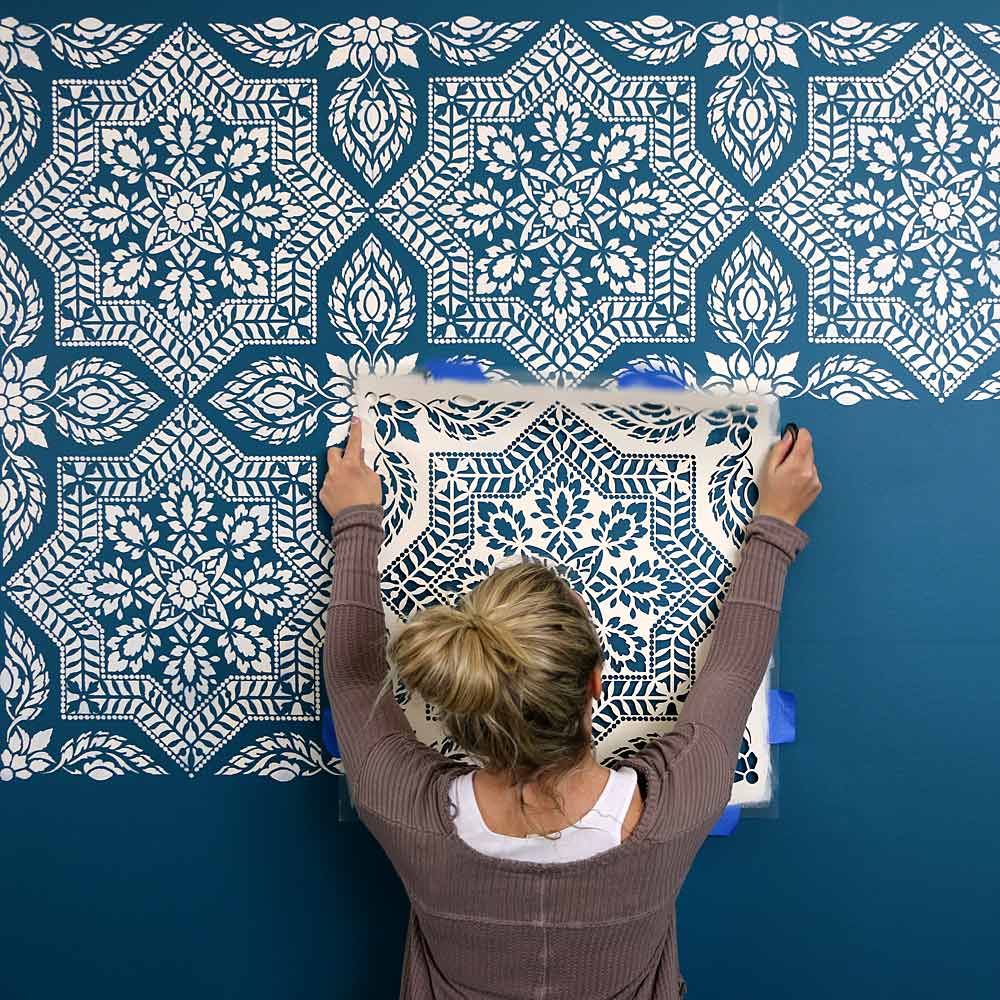
Wall stenciling is a decorative wall painting technique that uses reusable wall stencils to apply patterns directly to your walls. Unlike wallpaper, stencils are affordable, customizable, and reusable — giving you complete control over color, scale, and style.
From classic damask pattern stencils to modern geometrics, florals, or even Furniture stencil styles, stenciling can transform any room into a statement space.
Tools You’ll Need for Wall Stenciling
Before starting your stenciled wall project, gather the right supplies:
-
-
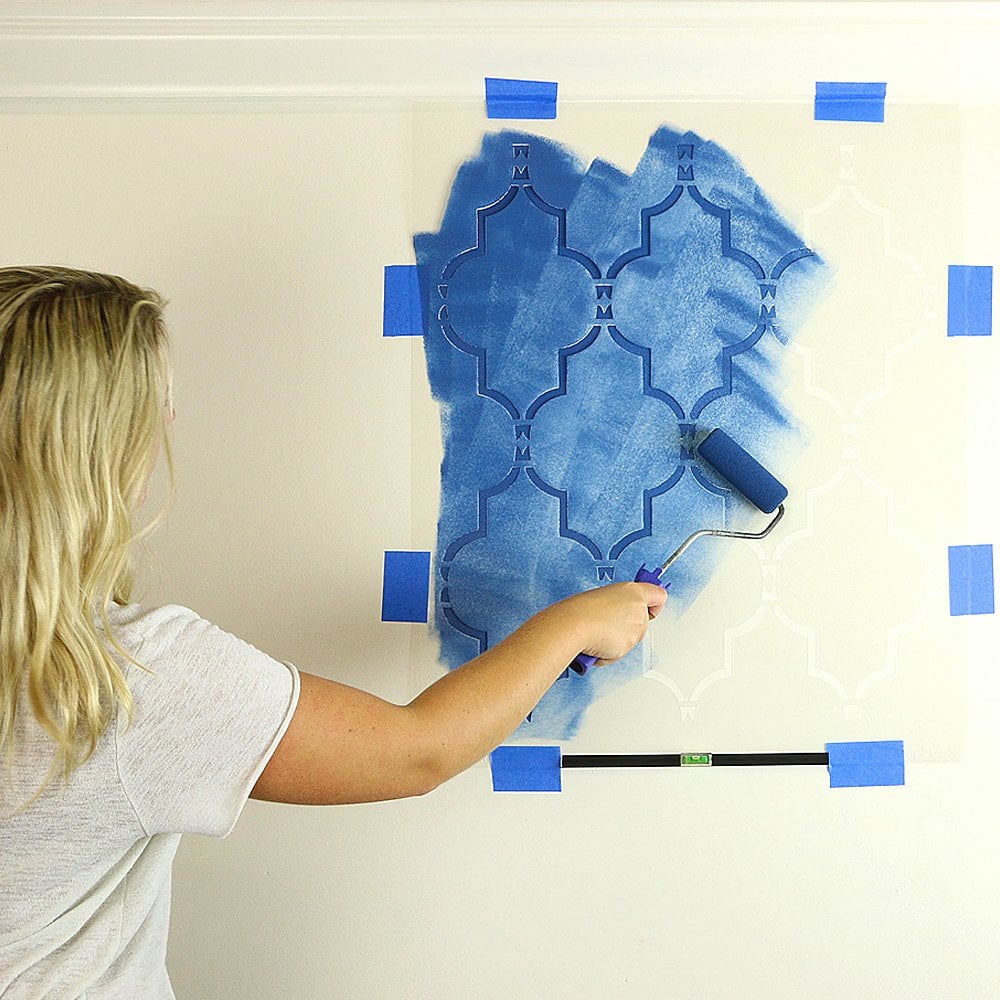
Wall Stencil Pattern – Browse large wall stencils for faster coverage and a wallpaper-like effect.
-
Flat Sheen Paint – Use flat or matte paint for your base coat. We also recommend using a flat based paint, or acrylics, for then stenciling portion as it will significantly reduce the risk of paint bleeding behind the stencil.
-
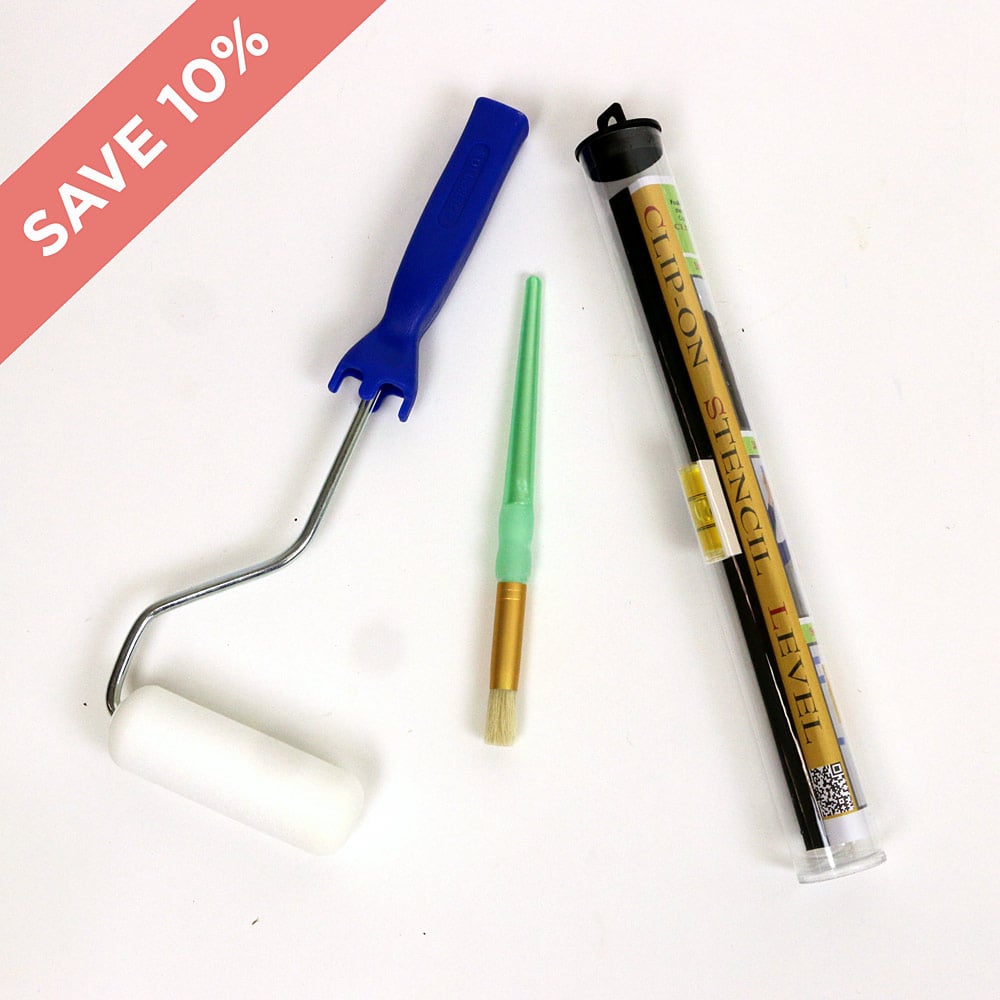
Foam Roller – Check out our stenciling tools for dense foam rollers.
-
Stencil Brush – Perfect for corners and details (see brushes here).
-
Painter’s tape – To secure your stencil and protect trim or molding.
-
Stencil Level – Try our clip-on stencil level to keep designs perfectly straight.
-
Optional Spray Adhesive – Helps the stencil stick flat for crisp edges. Find it here.
-

How to Prepare Walls for Stenciling
Prepping your wall ensures clean, professional results:
-
-
Clean and smooth the surface – Patch holes, sand rough spots, and wipe down dust.
-
Paint your base coat – Apply flat sheen paint and let it dry at least 24 hours.
-
Secure your stencil – Use painter’s tape, or optional spray adhesive, and check alignment with a stencil level.
-
Mask off trim – Protect baseboards, ceilings, and molding with tape.
-
Test first – Practice your roller technique before stenciling the wall.
-
👉 Need a visual? Check out our step-by-step wall stenciling tutorial.

Wall Stenciling Techniques: Tips for Crisp Results
-
-
Use minimal paint – Off-load excess paint on a paper towel before rolling. A “dry” roller prevents bleed.
-
Roll gently – Apply light to medium pressure. Too much pressure pushes paint under the stencil.
-
Build coverage gradually – Use several light layers rather than one heavy coat.
-
Align patterns carefully – Many of our allover wall stencils have built-in registration marks to help align repeats.
-
Clean as you go – Wipe excess paint from your stencil for sharp lines.
-

Easy Wall Stenciling Projects for Beginners
Here are a few simple ways to start:
-
-
Accent Wall – Choose a bold accent wall stencil and cover one wall for a dramatic focal point. This works especially well in a nursery with accent wall where you want a playful, stylish feature.
-
Tone-on-Tone Walls – Use two shades of the same color with a geometric stencil or a subtle, sophisticated effect.
-
Floral & Nature Designs – Try a flower floral pattern or even a calming bamboo on the wall design for a serene, organic feel.
-
Wall Borders or Stripes – Stencil a wide stripe across the wall or a top border using border stencils.
-
Common Mistakes in Wall Stenciling (and How to Avoid Them)
-
-
Overloaded roller → Causes paint bleed under the stencil.
-
Skipping wall prep → Uneven surfaces and glossy paint lead to messy results.
-
Crooked patterns → Always use registration marks and a stencil level.
-
Rushing → Let paint dry before repositioning your stencil to avoid smudges.
-
Why Try Wall Stenciling?
Wall stenciling is affordable, customizable, and beginner-friendly. Unlike wallpaper, you can easily change your design whenever you’re ready for a new look. With just a few tools and some patience, you can achieve walls that look hand-painted and professional.
Whether you’re creating modern wall art wall painting, a traditional damask accent wall, or a playful nursery design, stenciling opens endless possibilities.
Ready to get started? Explore our full collection of wall stencils and transform your space today!

Keep Creating with Cutting Edge Stencils ✨
You’ve got all the basics now—why stop there? Here are more stencil projects, design ideas, and tutorials to spark your creativity:
🖌️ Read More on the Blog:
🌿 Stay Connected & Inspired:
Follow Cutting Edge Stencils for daily stencil tips, wall ideas, and real customer makeovers:
-
-
Instagram: @cuttingedgestencils
-
Pinterest: Cutting Edge Stencils
-
Facebook: Cutting Edge Stencils
-
YouTube: Cutting Edge Stencils
-
💬 Have questions or want to show off your stenciled wall? Tag us on social or use #CuttingEdgeStencils — we love seeing your work!