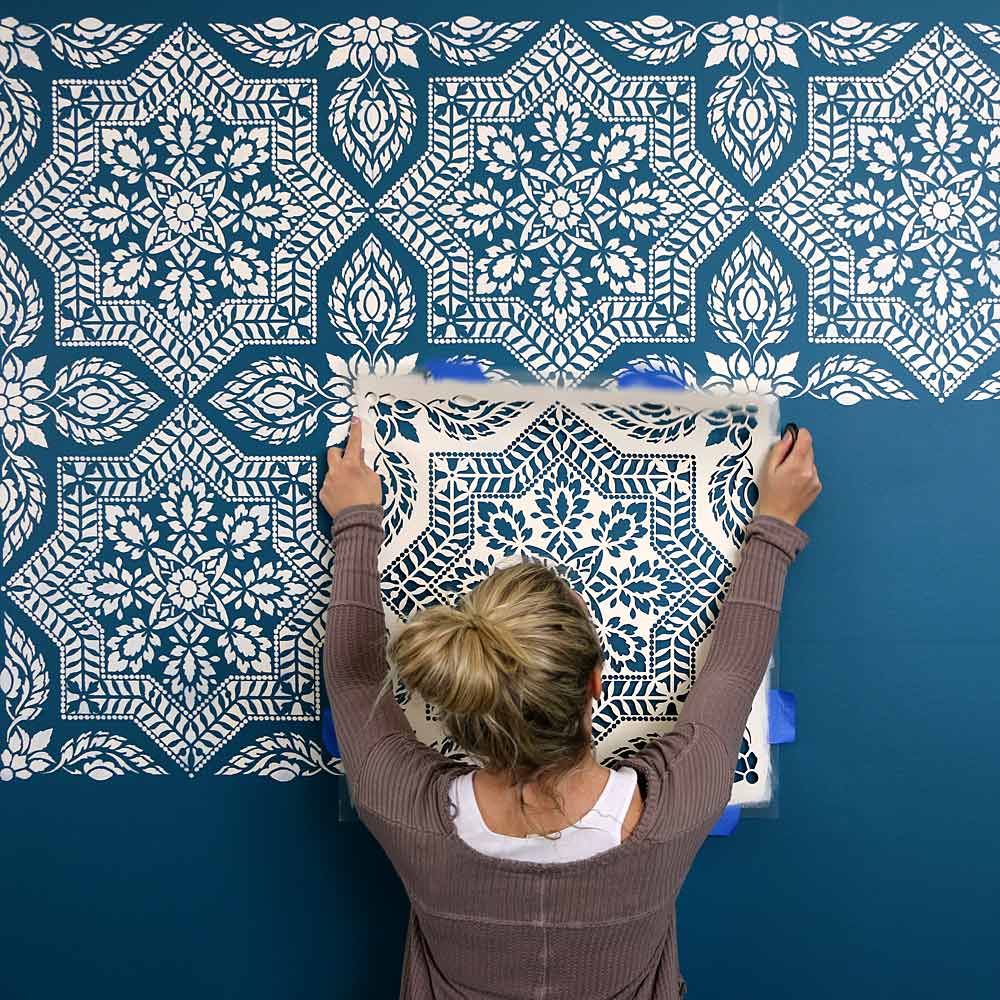
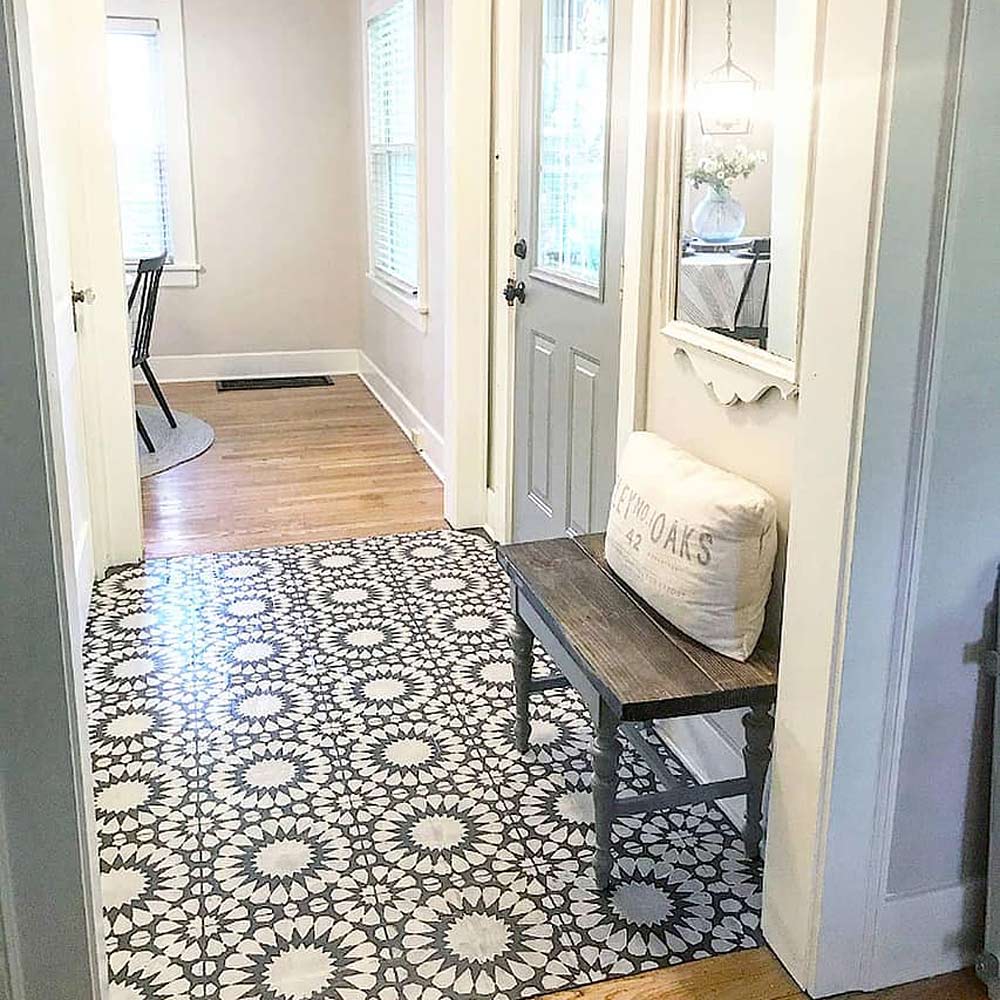
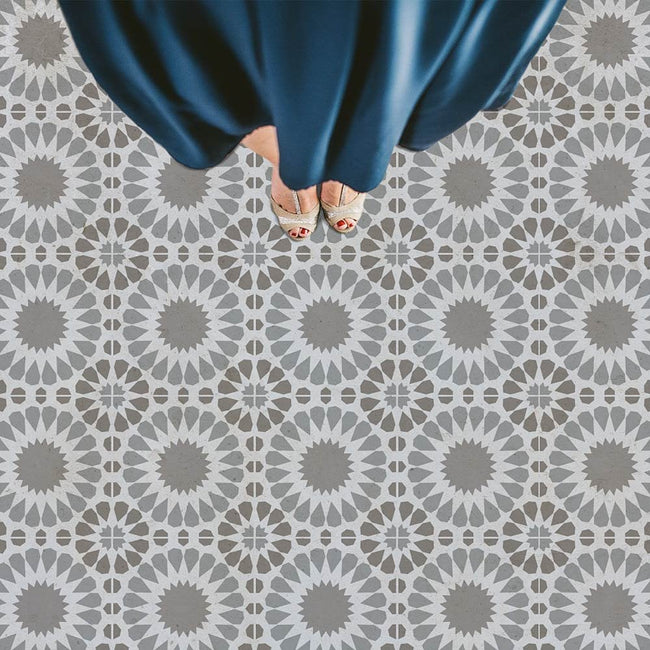
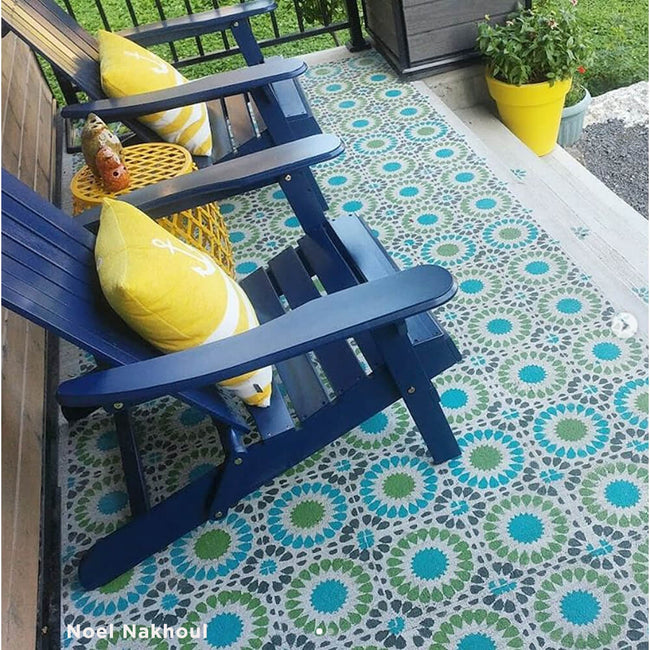
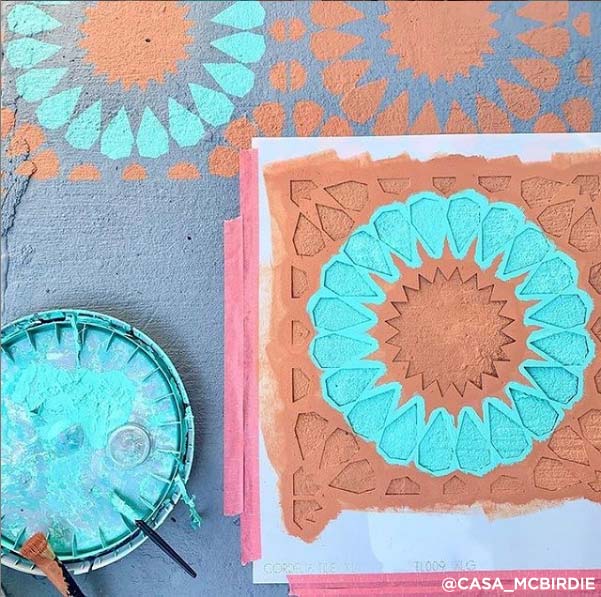
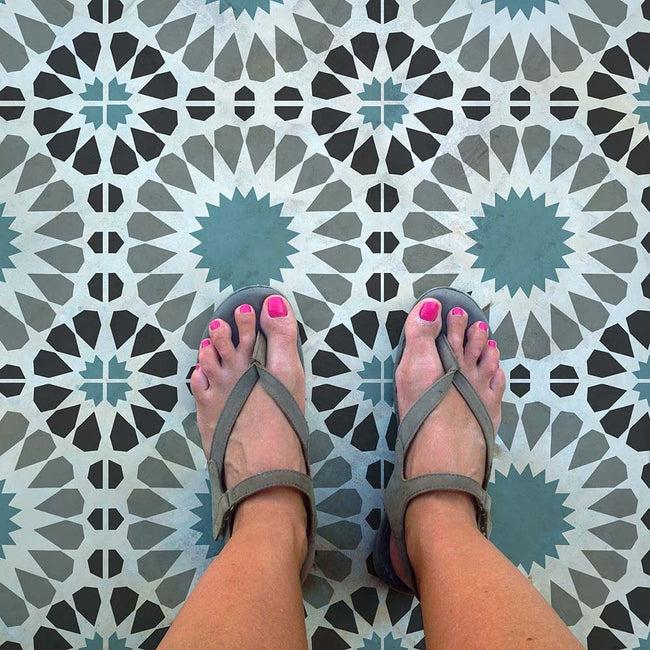
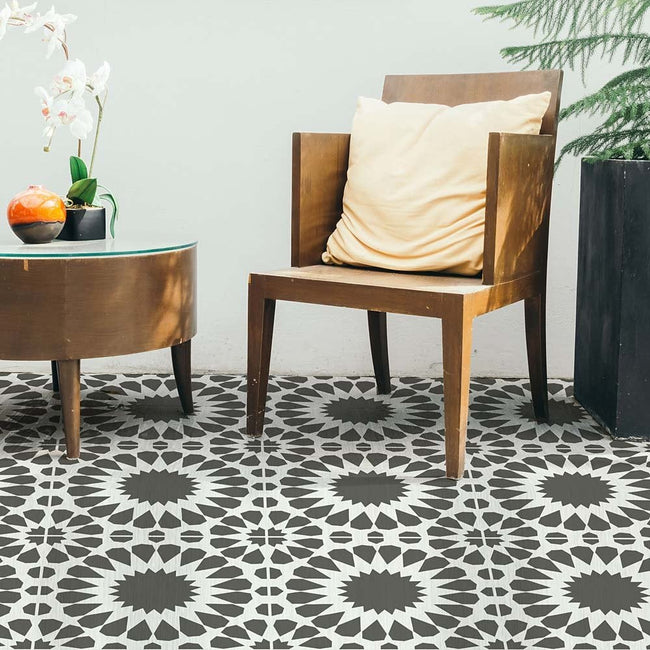
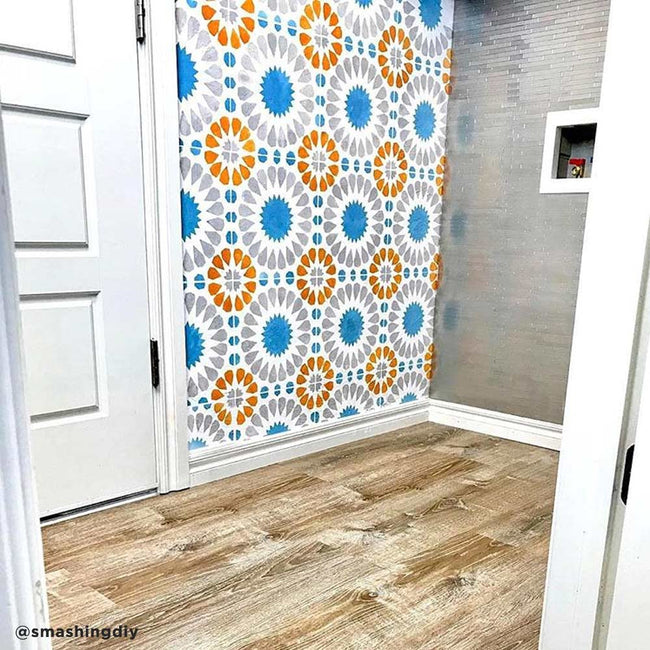
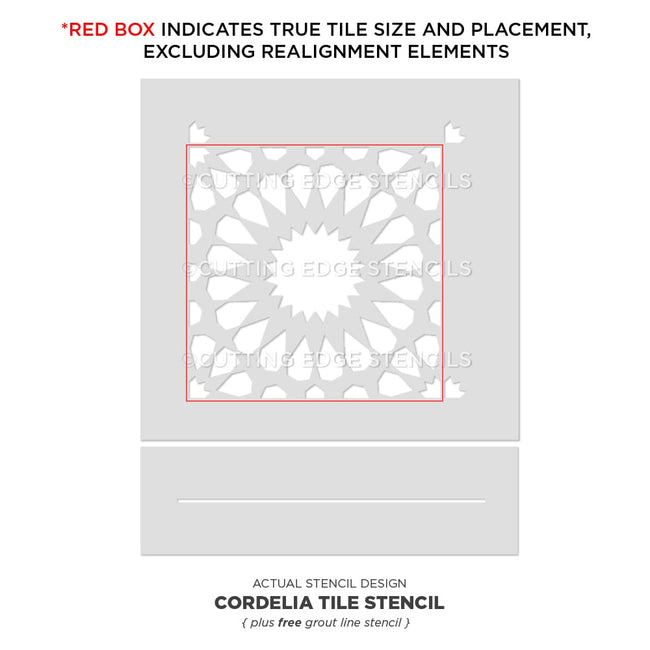
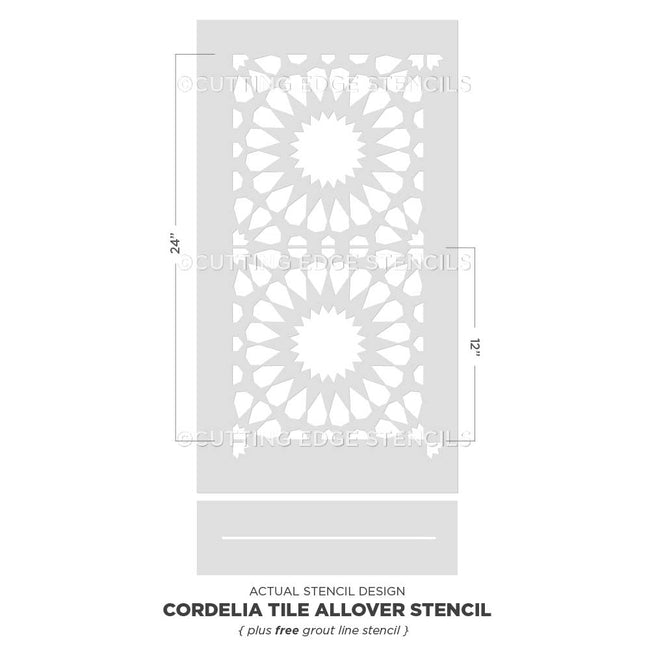
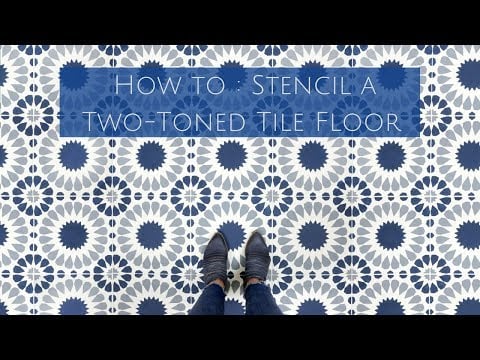
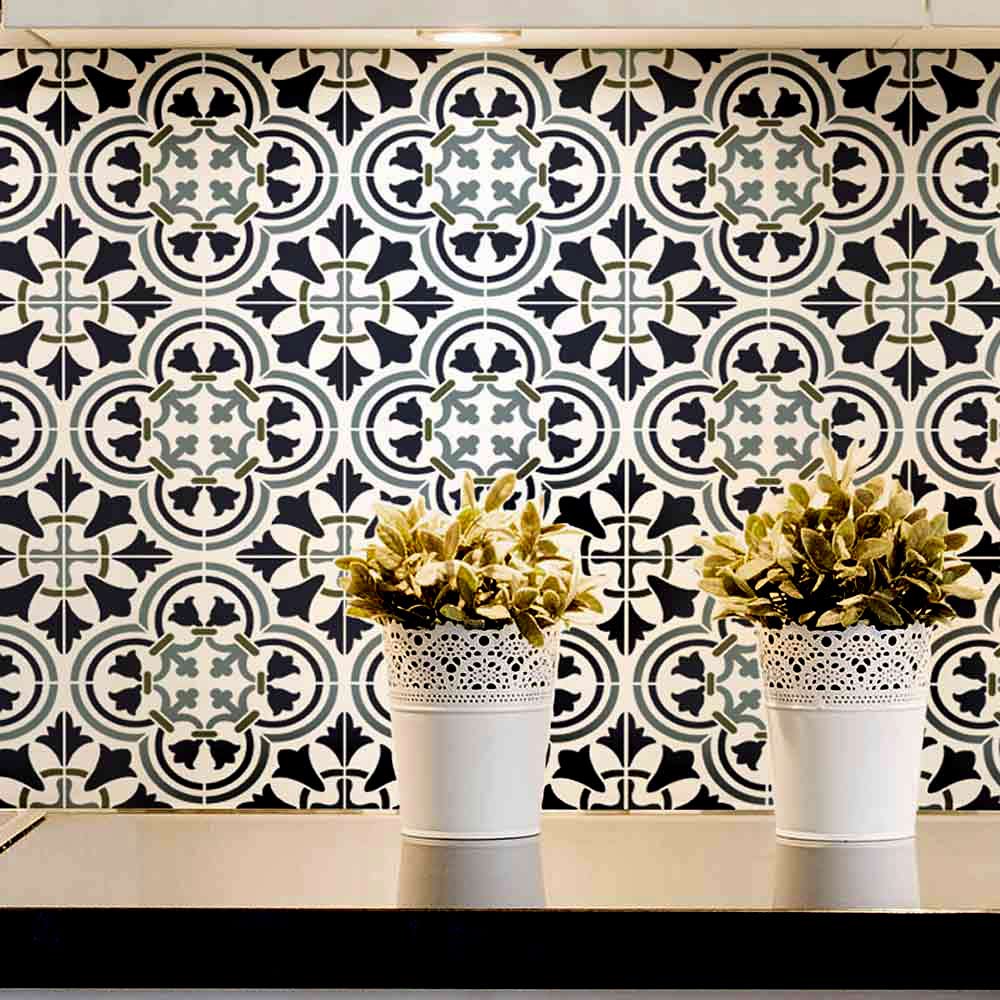
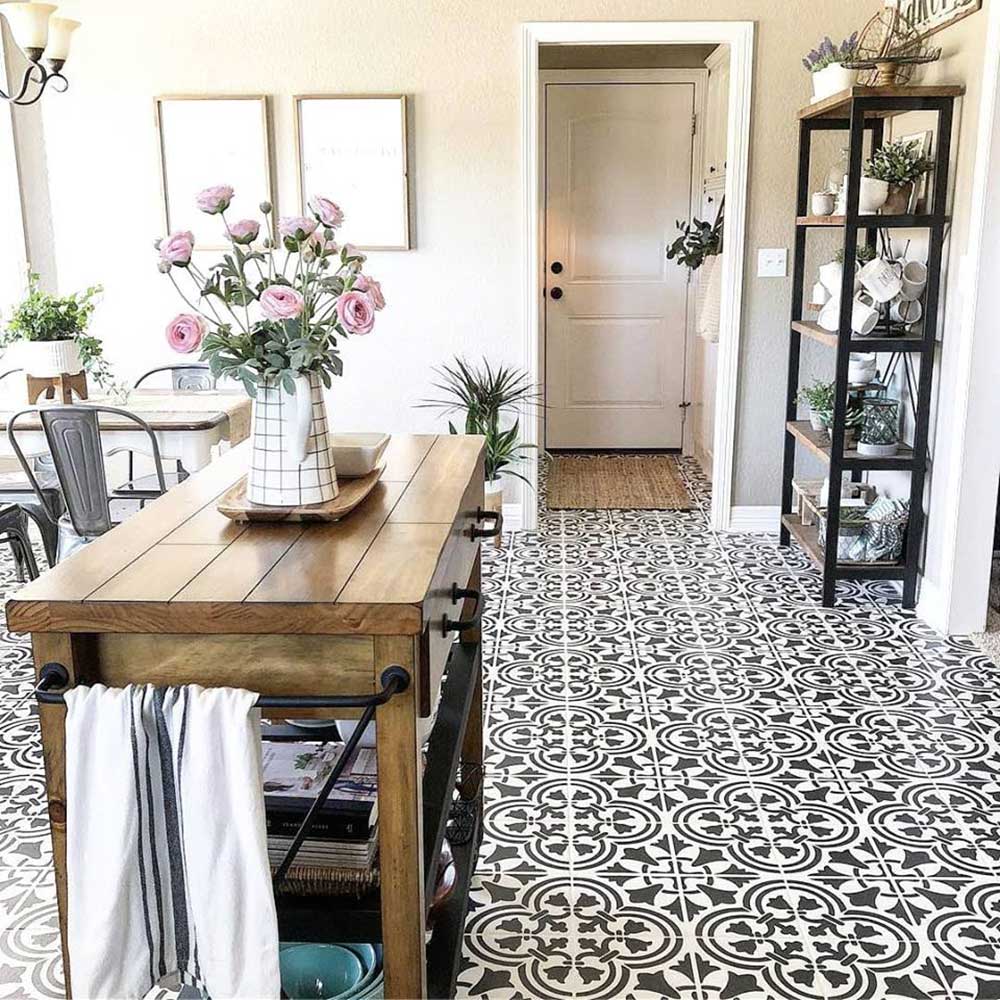
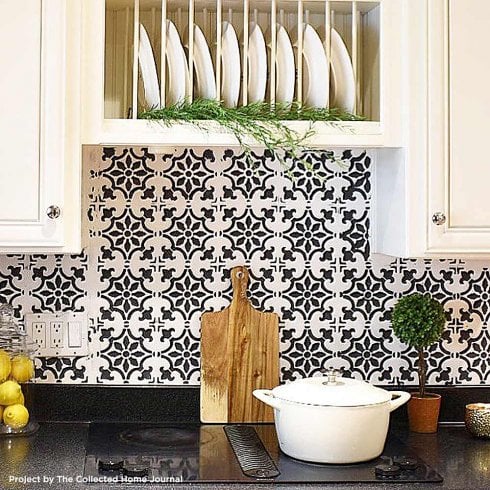
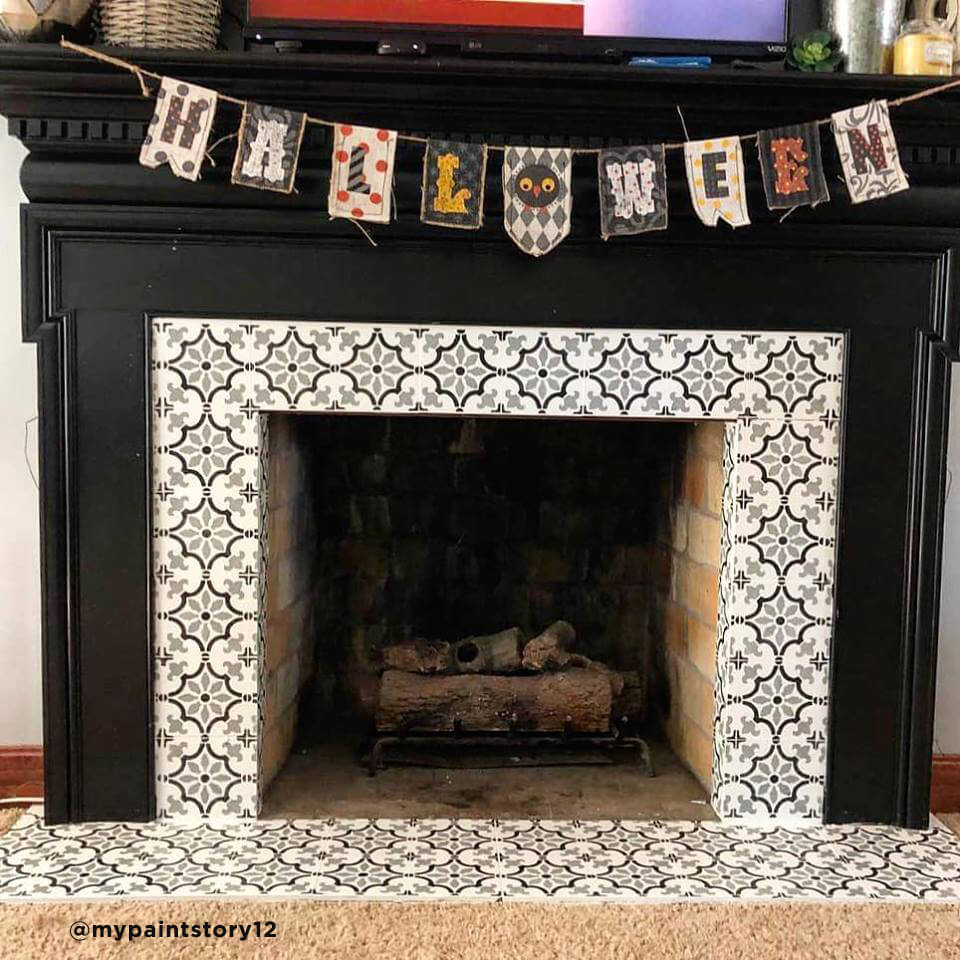
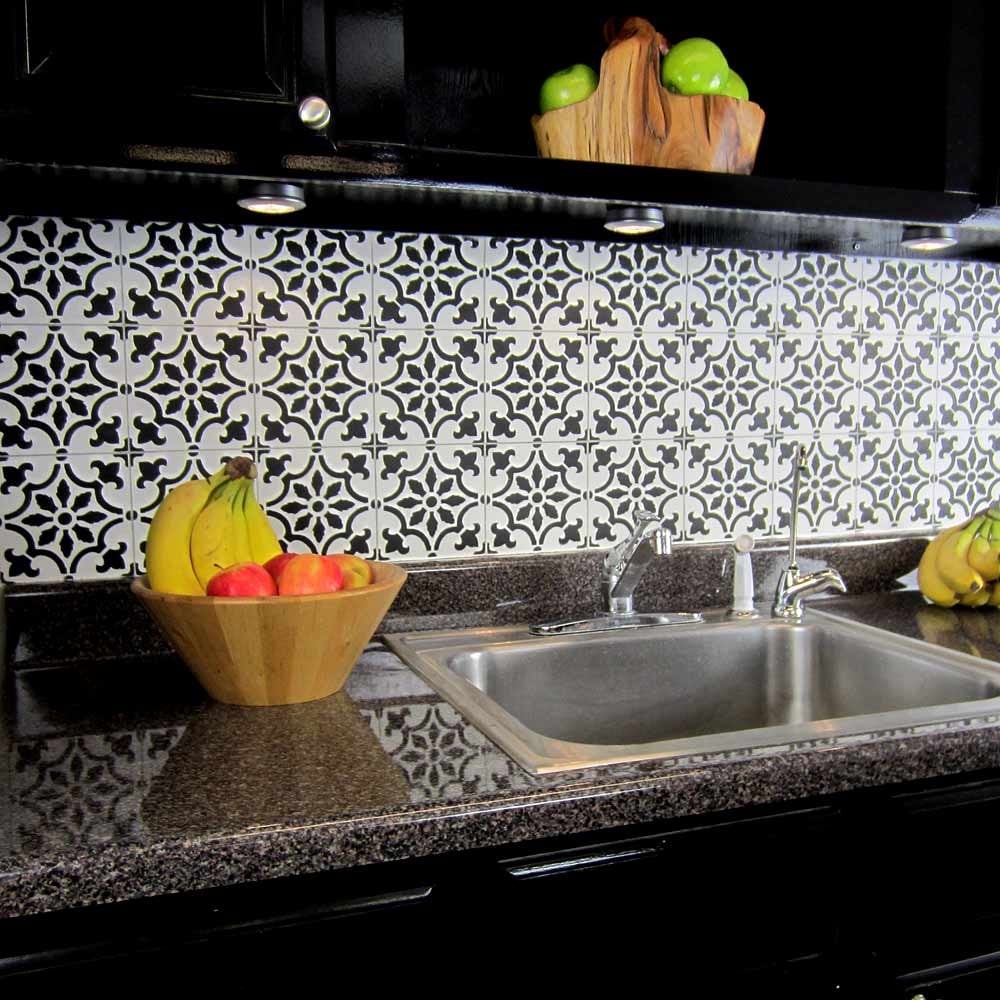
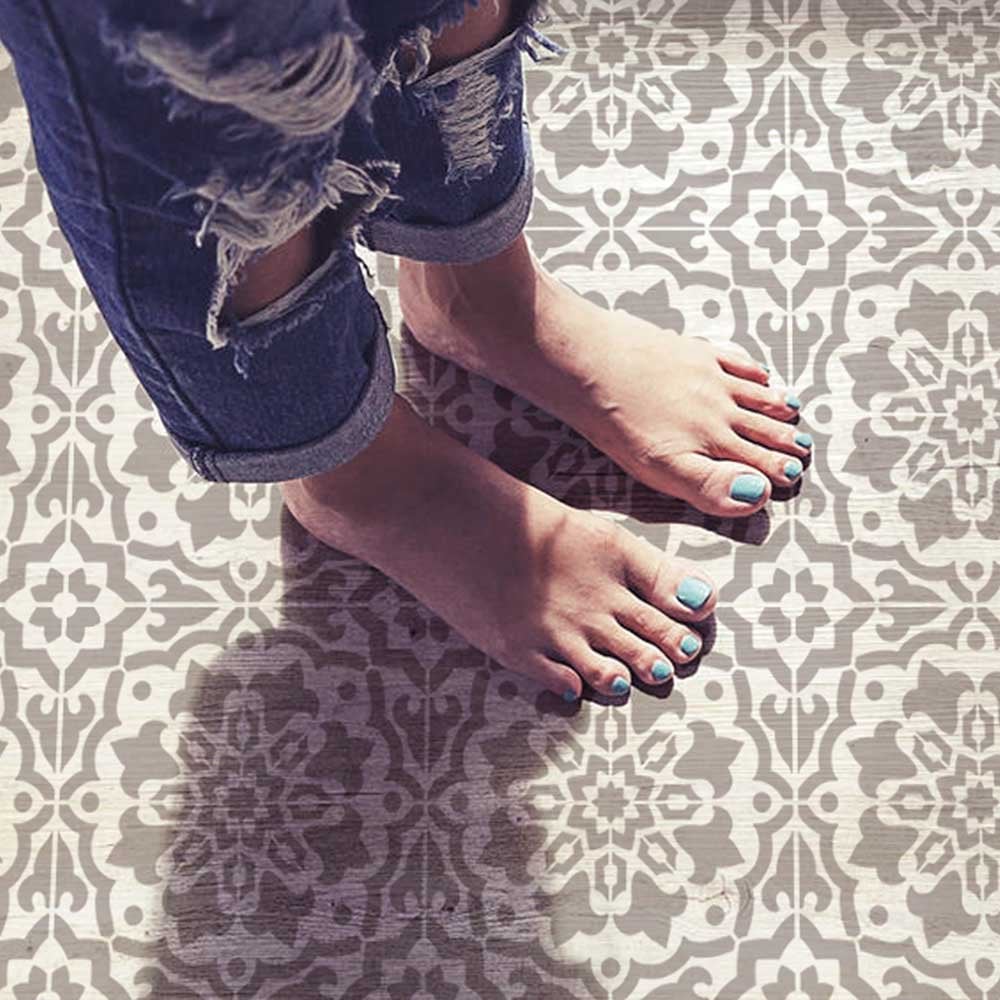
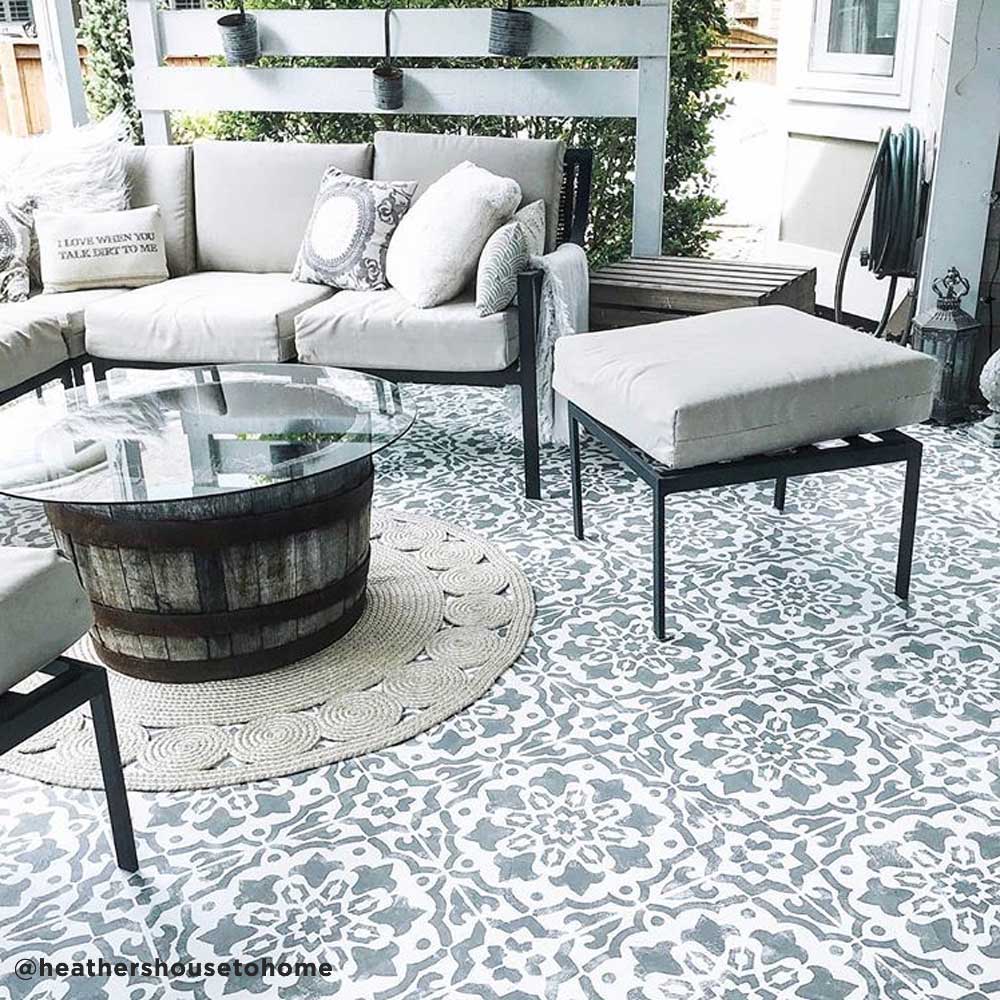
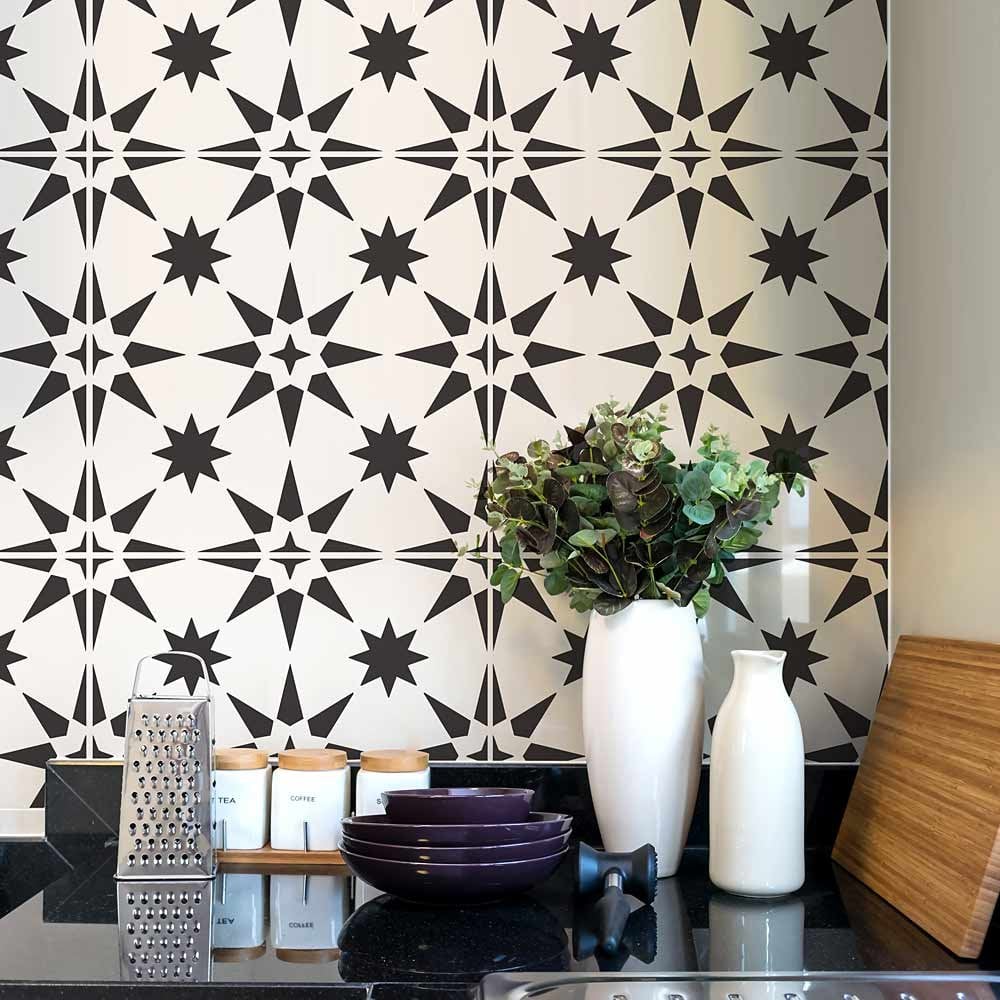
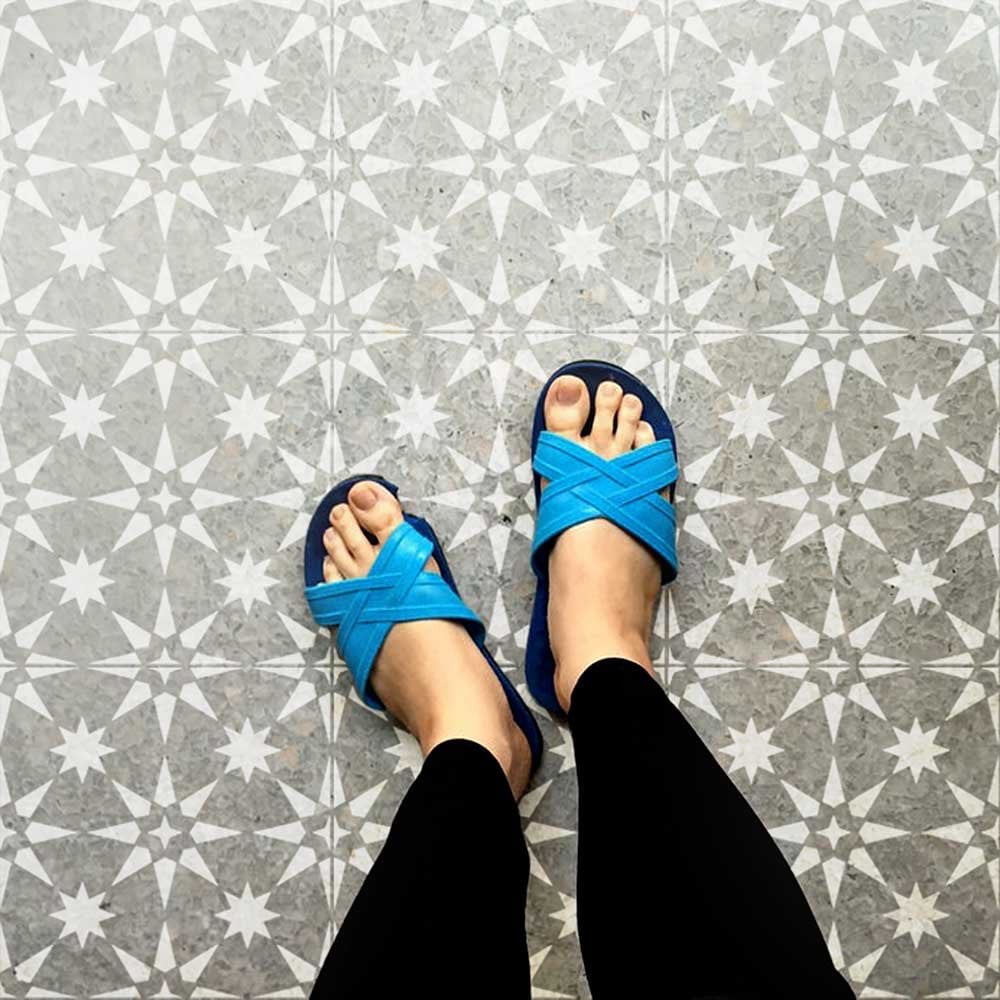
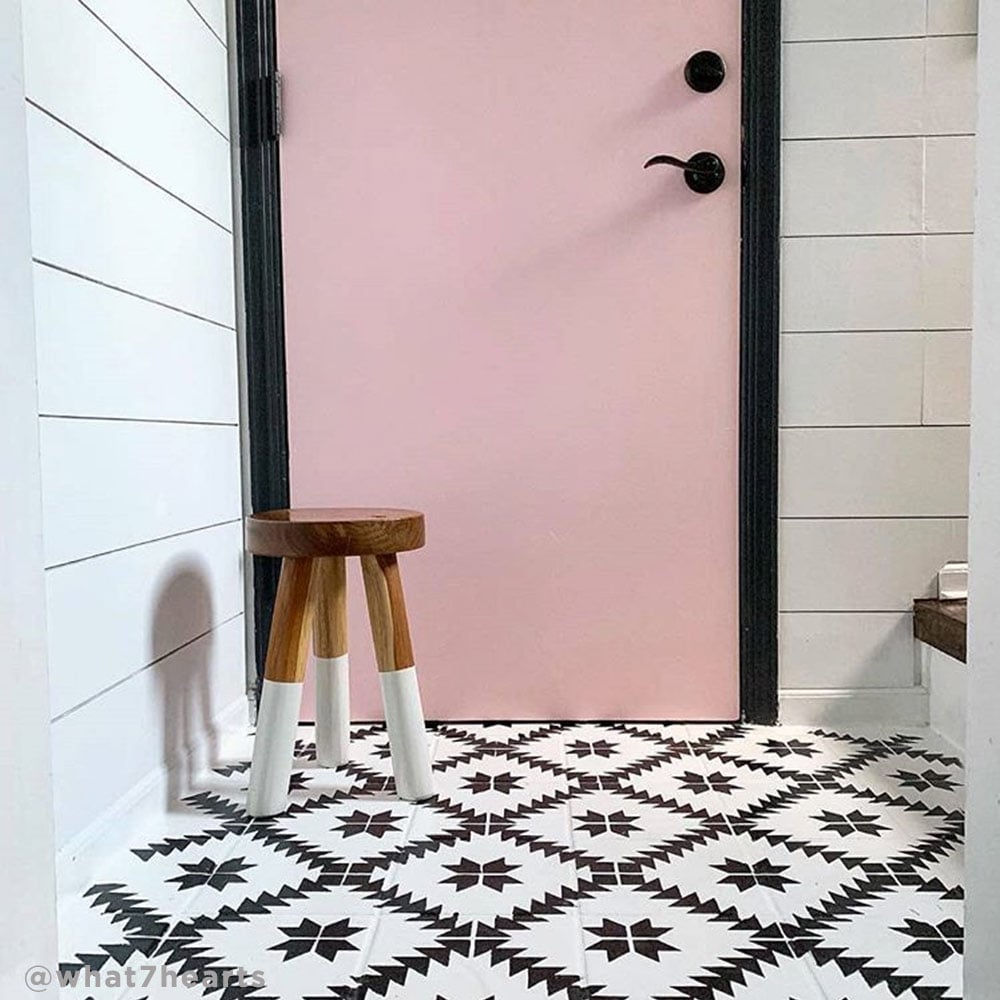
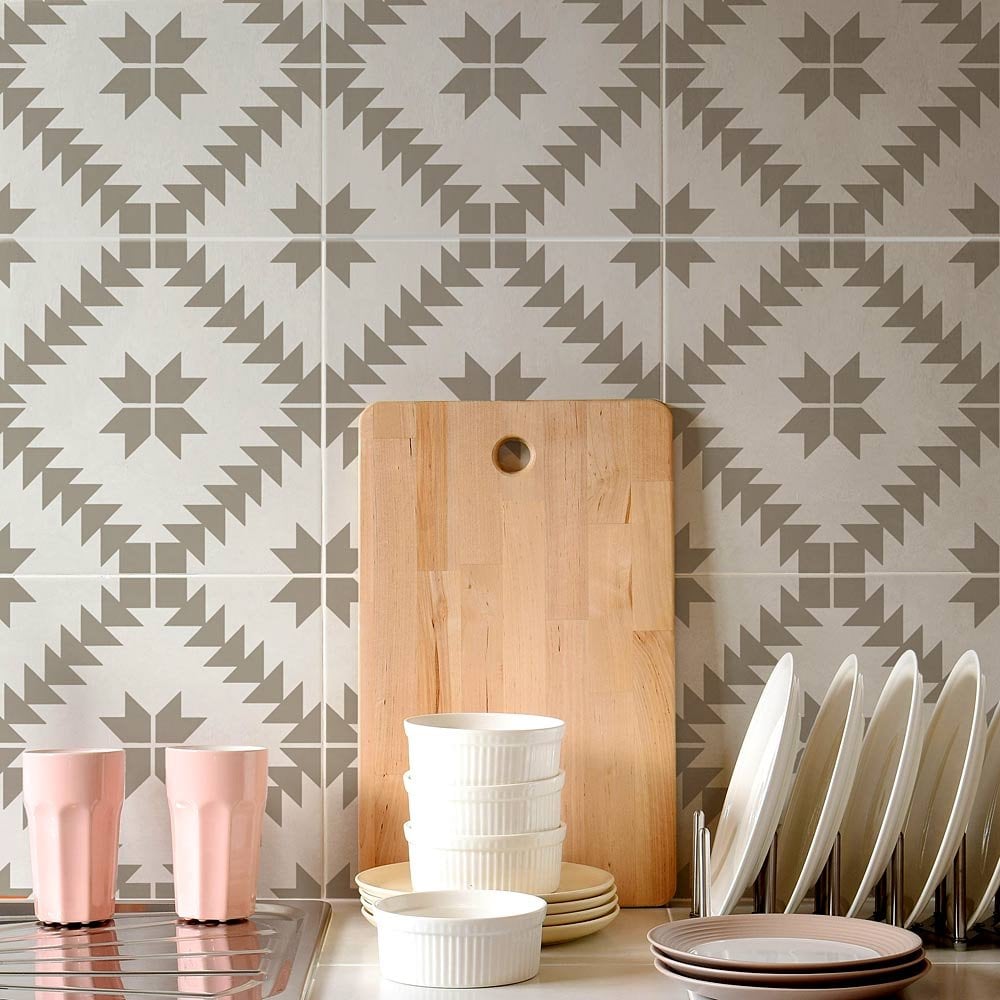
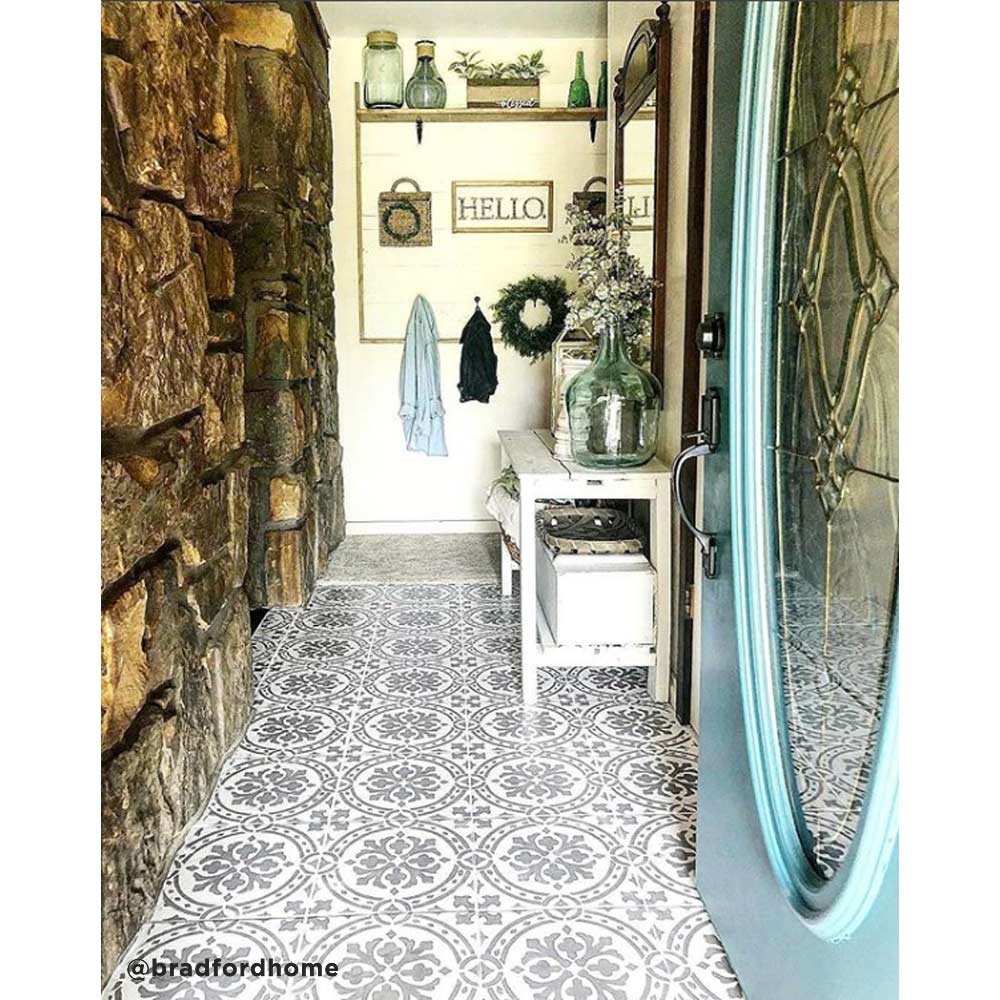
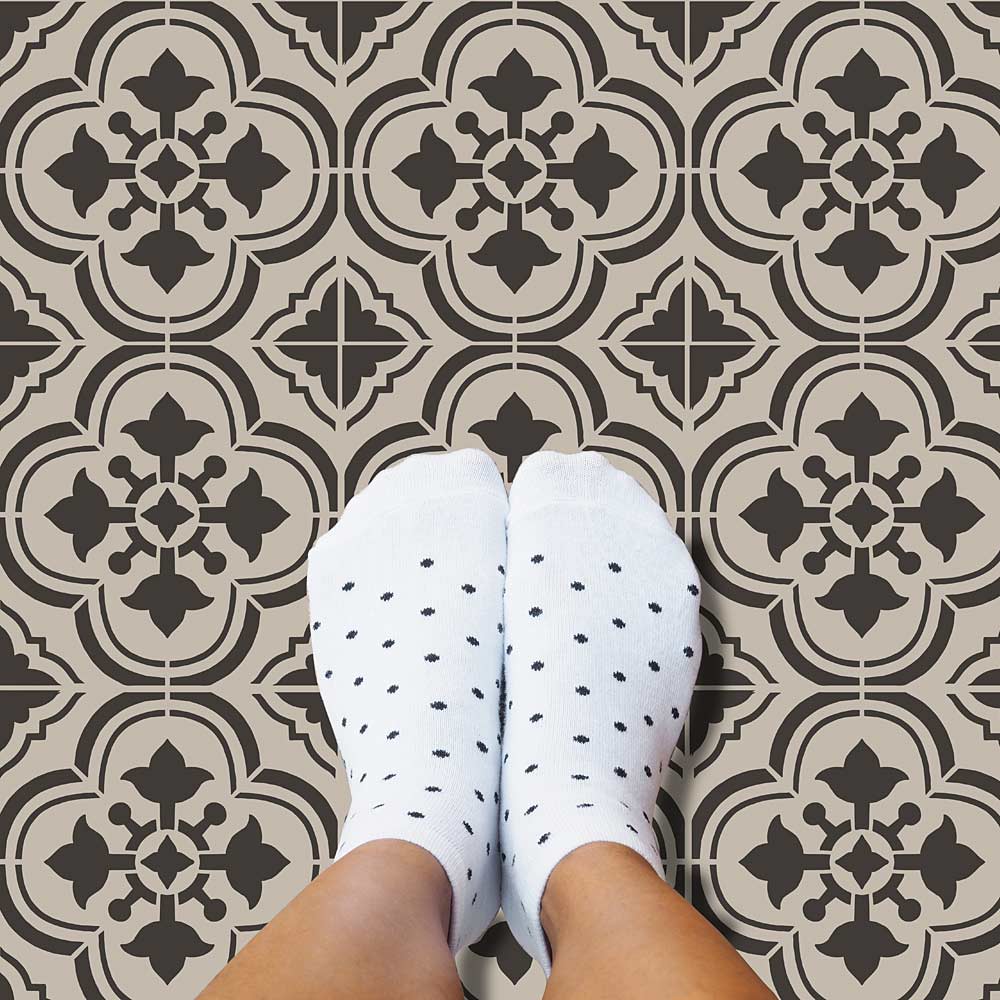
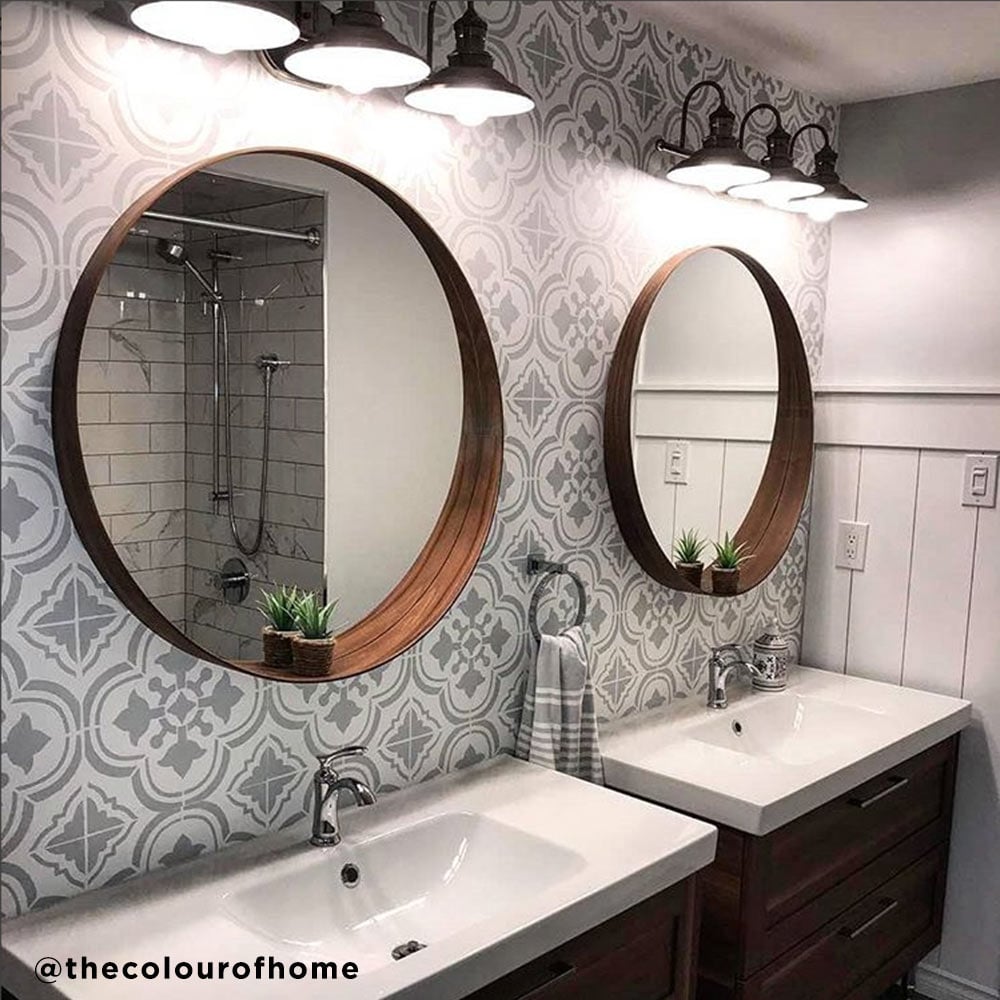
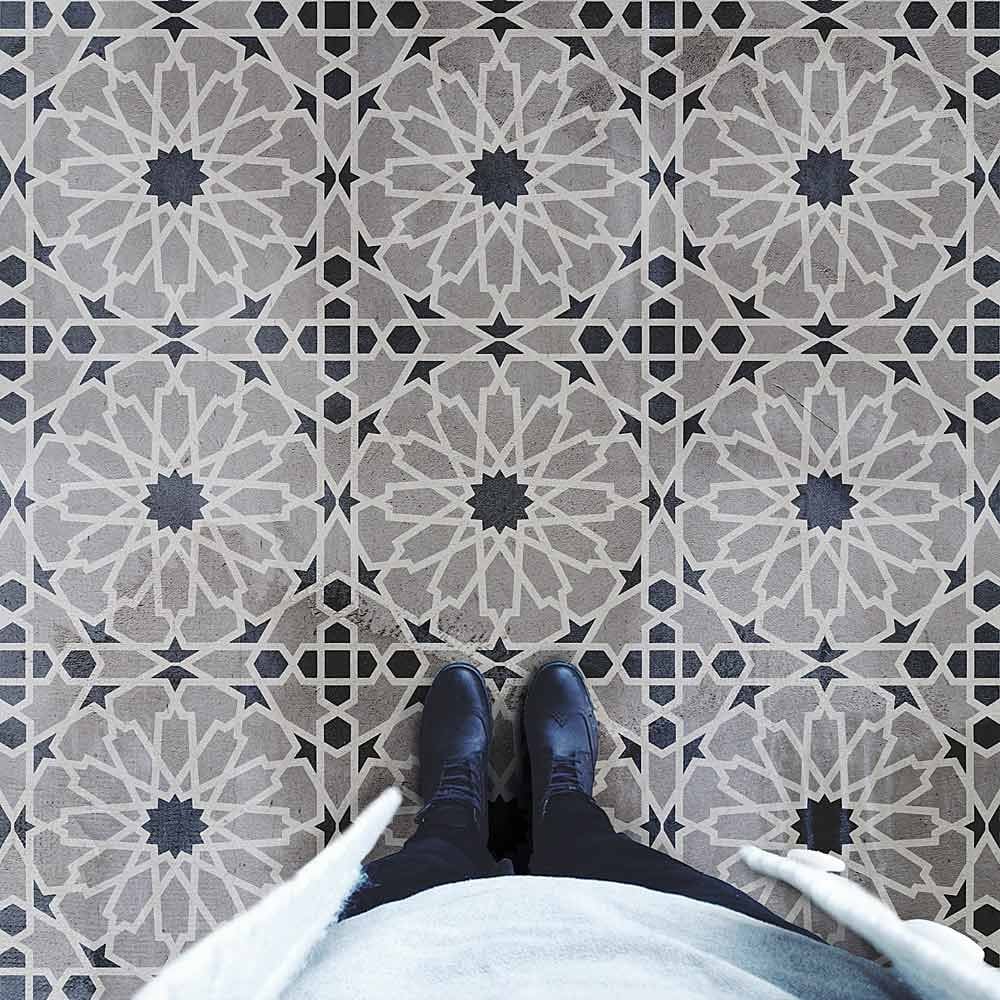
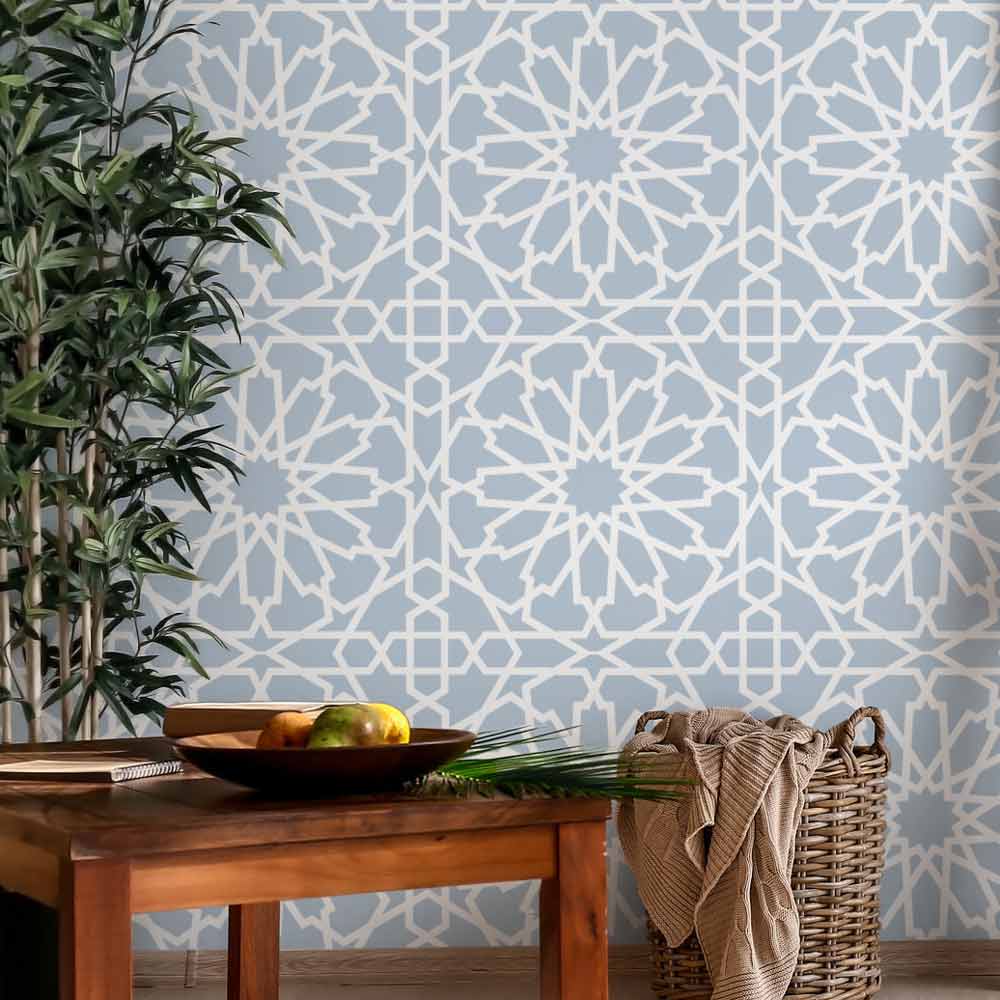
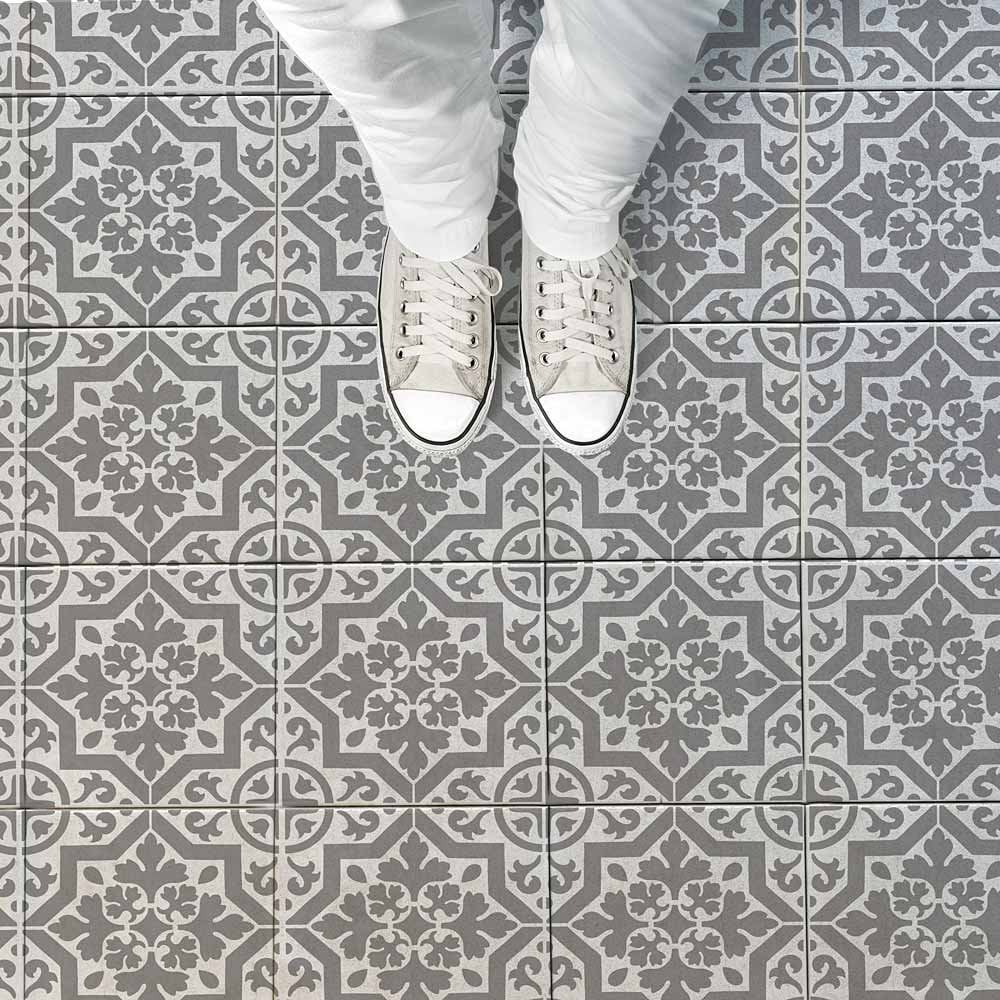
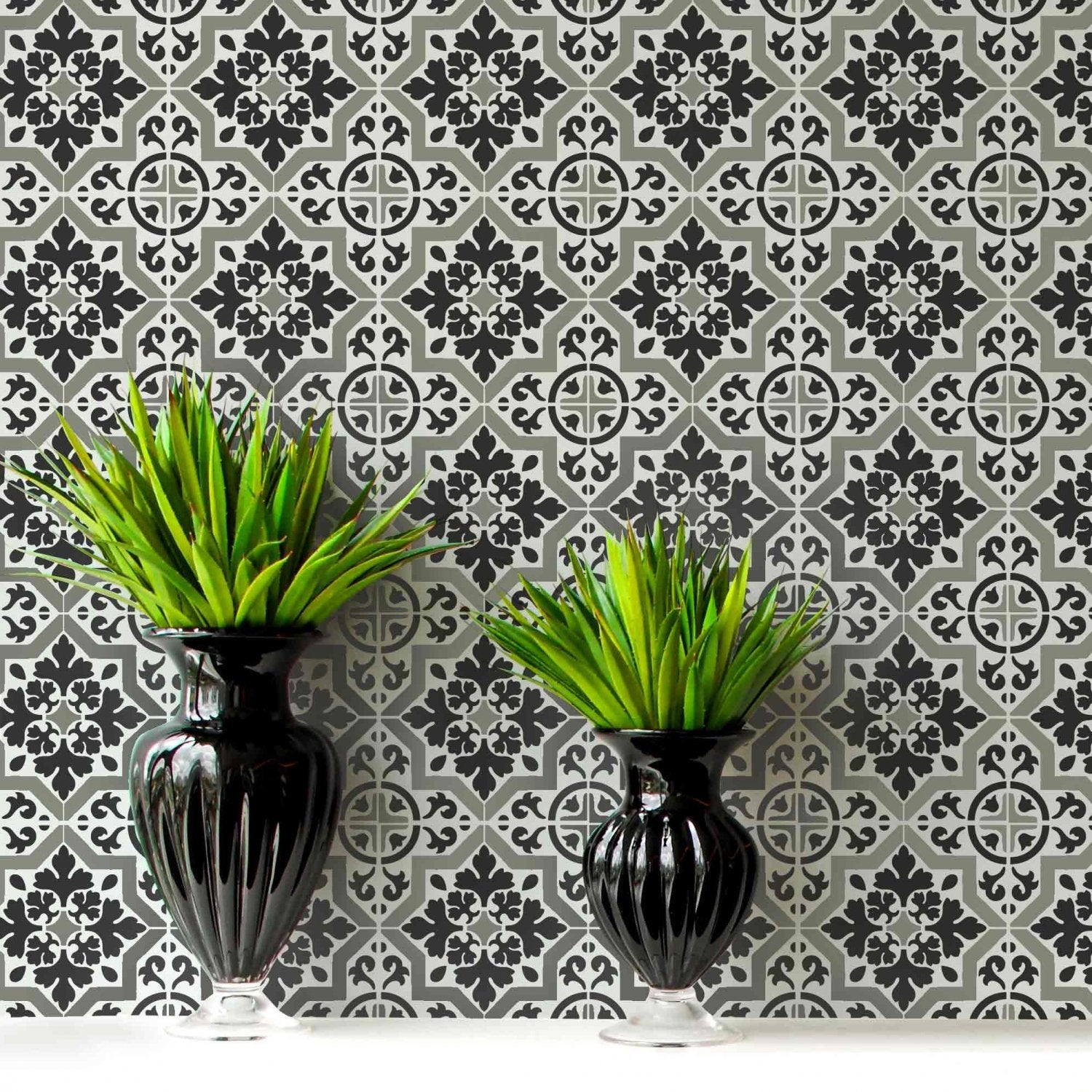
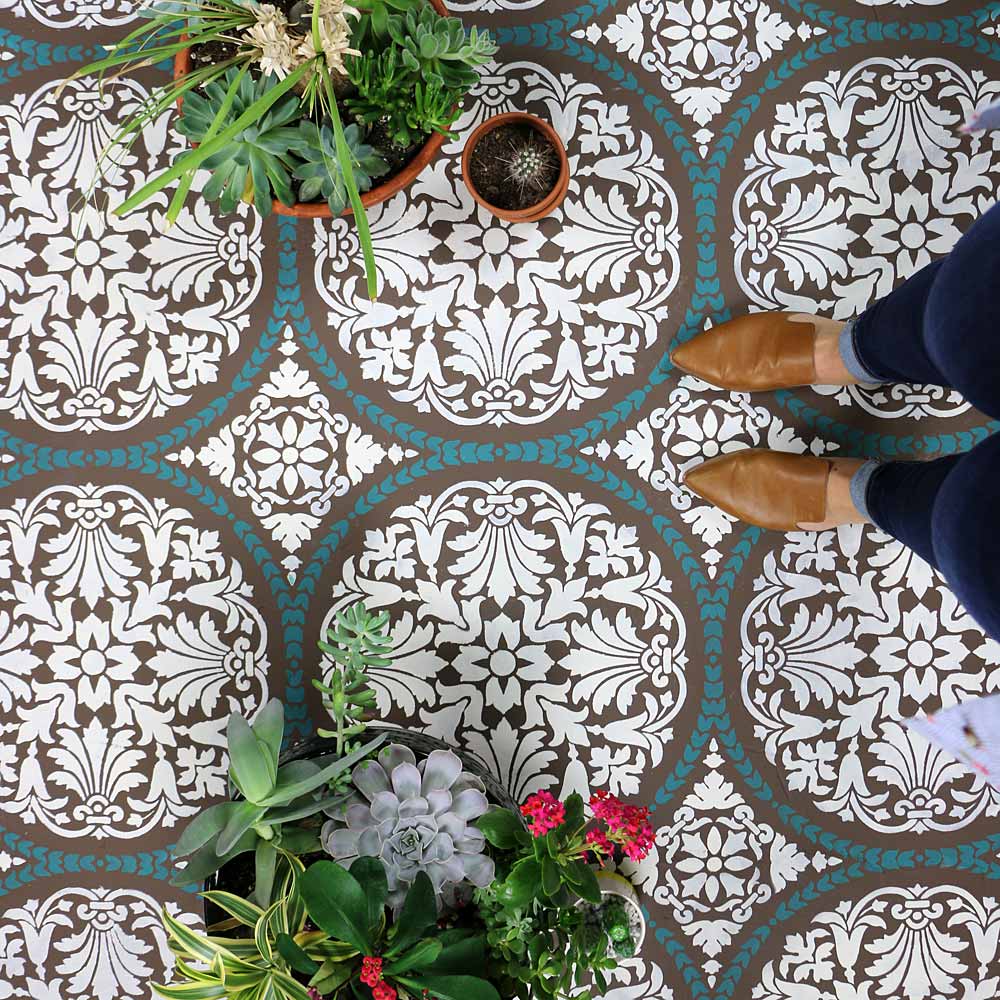
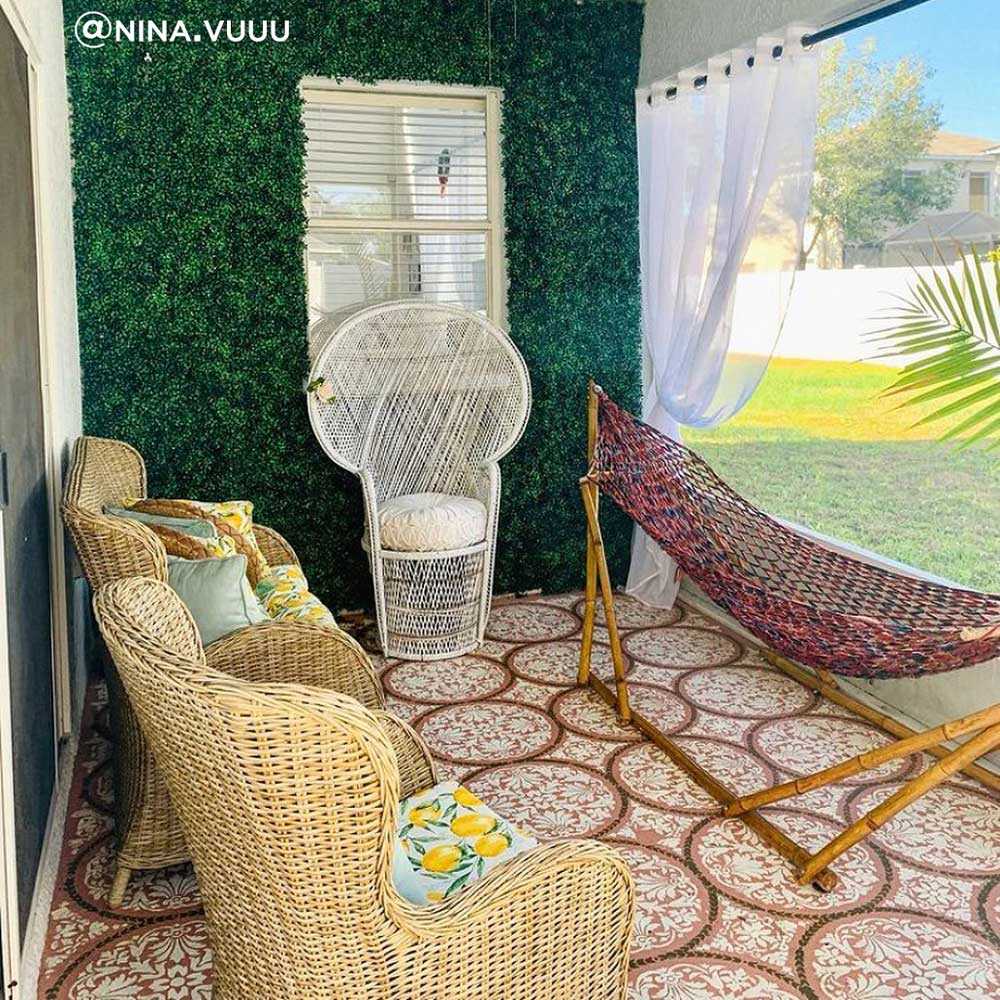
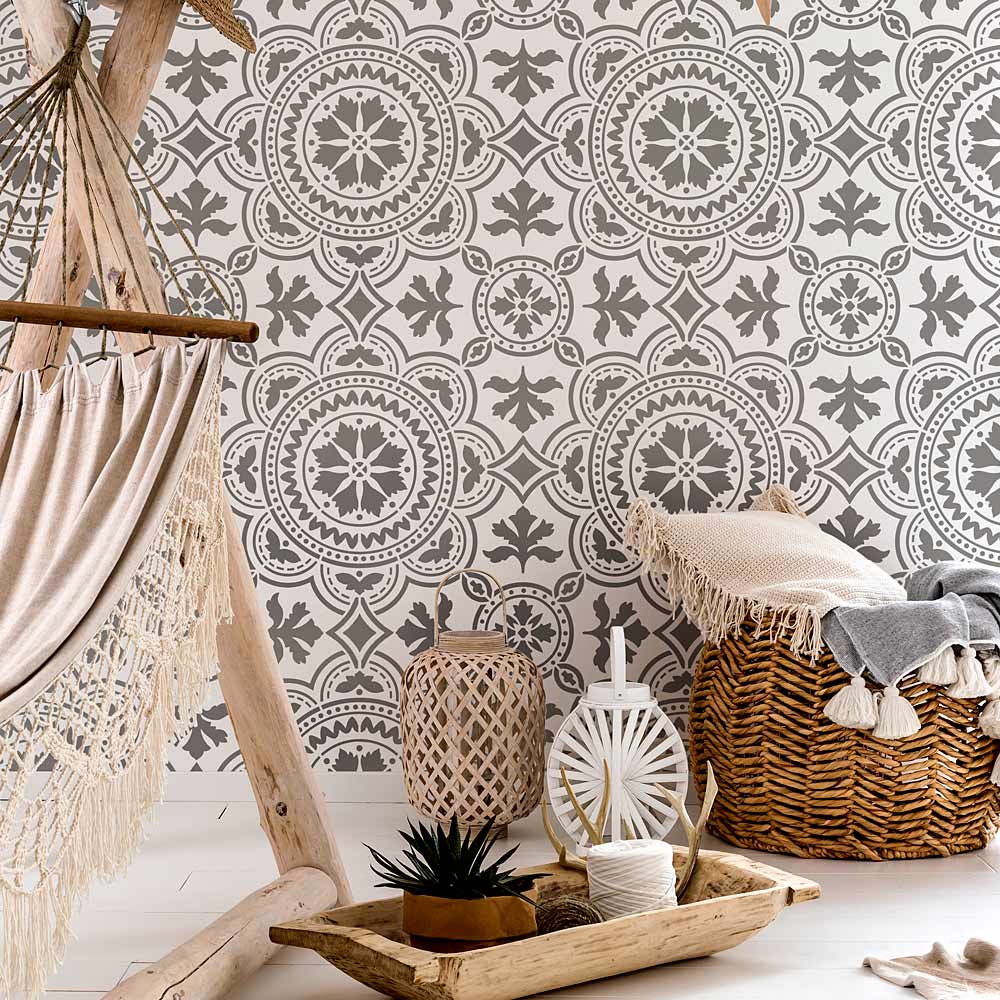
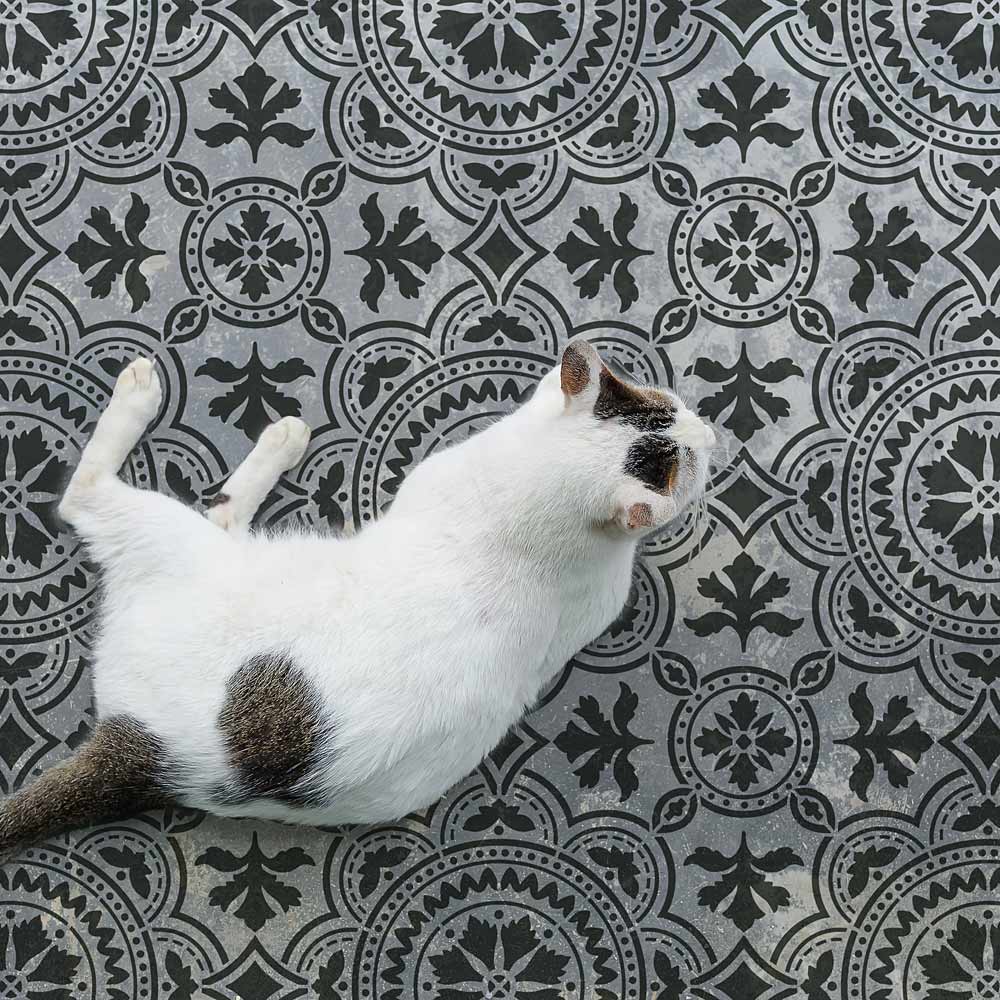
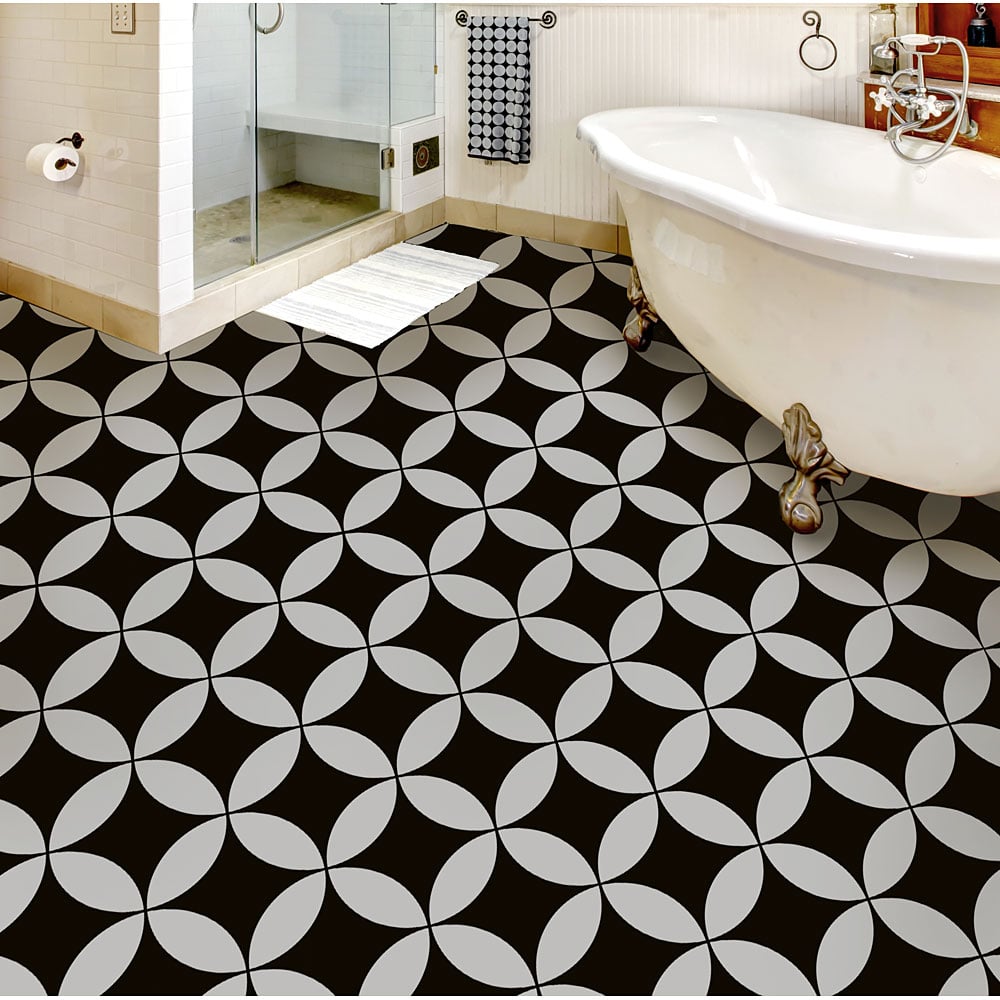
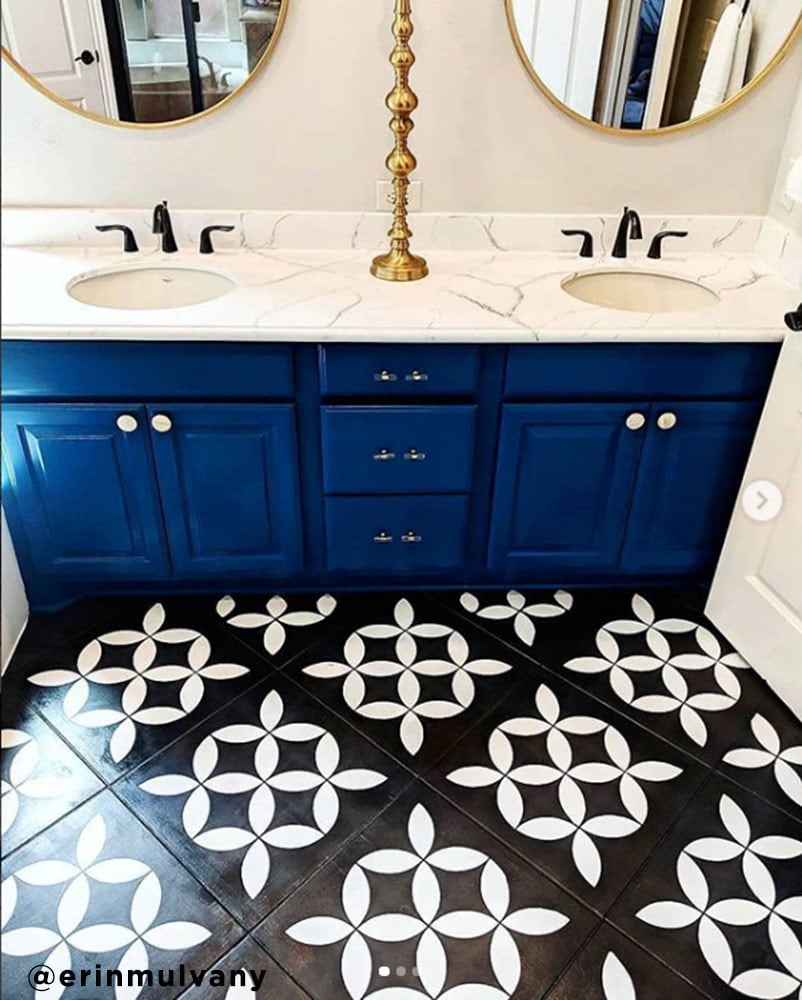
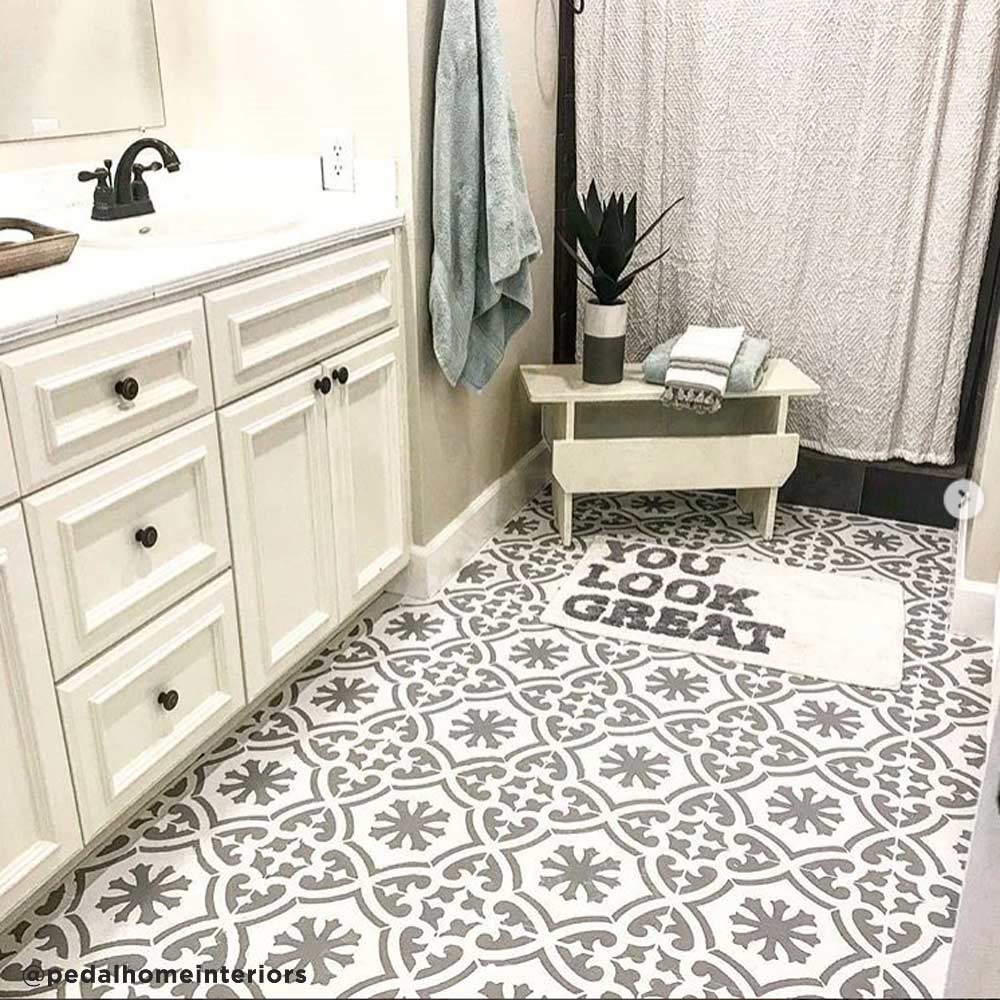
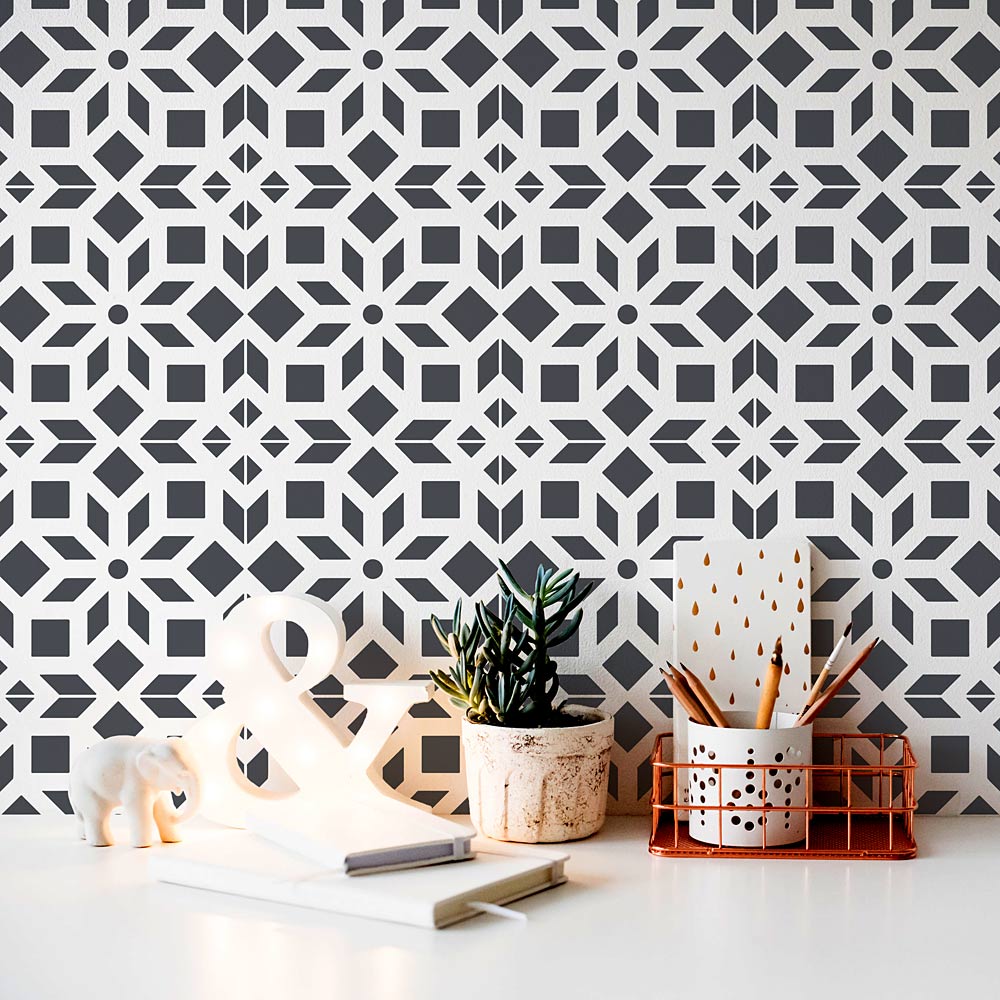
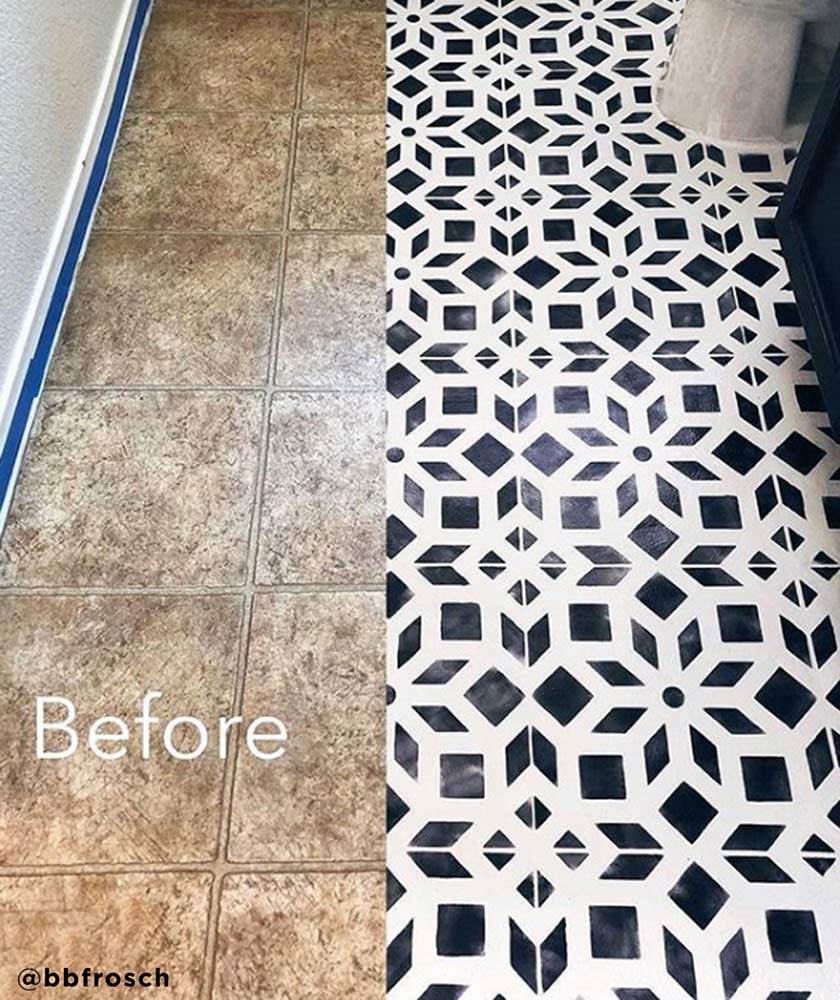
Our Cordelia Tile stencil design is a beautiful feminine tile pattern, perfect for bath floors. It was inspired and designed based on geometric Moroccan design of the past which is so popular today. Our Tile stencils are fabulous on walls, backsplashes or in place of popular cement floor tiles. Our tile stencil designs are super easy to use and provide big savings to more costly alternatives of wallpaper and floor tiles.
How to measure your tile: The size of our tile stencil designs are exactly as advertised. We currently offer them in 6", 8", 12", and 16". The grout line is NOT factored into those sizes. Before ordering, please measure your tile from tile edge to tile edge. Do NOT include the grout lines. If your tile is slightly larger/smaller than our listed dimensions, please contact customer service using Contact form.
We offer this tile stencil in 4 sizes, just like the real tiles: 6", 8", 12", and 16". Larger tiles are best for the stenciled floors, but will look great on a wall too. Use smaller tiles for the backsplashes and stenciled stairs. If you don't see your exact tile size stencil - please contact us and we can custom scale it for you! Call us at 201-828-9146 or email customer service using Contact form.
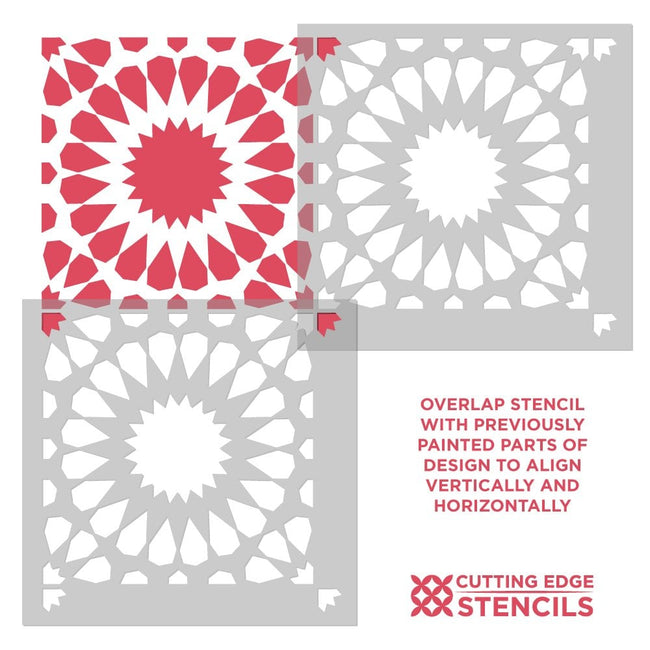
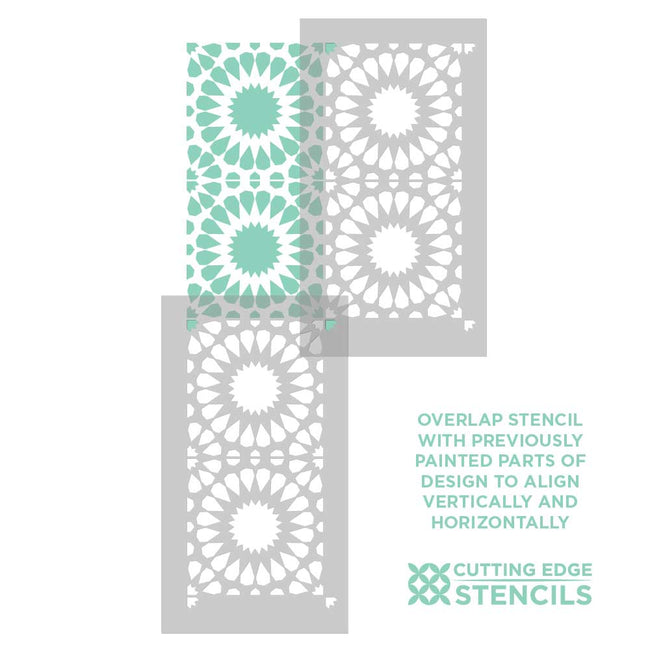
About registration marks: you can use them to align your tile stencil repeats, or not! It really depends on what surface you're stenciling. When stenciling over an existing old tile, the registration marks might not be helpful as the grout width varies from floor to floor. In this case, simply mask out the registration marks with pieces of blue tape, and align the stencil by eye by centering it on each old tile. If you are stenciling over a wall, or linoleum/cement floor - please use registration marks for easy alighnment of your tile stencil. Please see our alignment pic for reference.
We also include a free Grout Line stencil to give your stenciled tiles that sharp, clean look!
Learn How to stencil a tile – it’s easy even for beginners!
We recommend purchasing two tile stencils for your project. Not only it will go faster, but you'll be able to get into tighter places and corners by cutting your spare tile stencil. You can certainly bend your stencil and still get to all the tight spots, but you know what we're sayin' - having two stencils makes your life much easier! :)
To stencil over existing old floor tiles, first thoroughly wash your floor, let it dry, then give it a coat of adhesive primer (Stix is best in our experience), after that apply a base coat color (regular wall latex paint will do). Then, stencil your floor in acrylic or latex paint and finally seal it with two coats of water-based polyurethane for durability.
How durable your newly stenciled floor will be? Very durable! In our experience the stenciled finish will last for years. We hear the same positive feedback from our customers about their durable stenciled tile floors. Just make sure to use the proper primer!
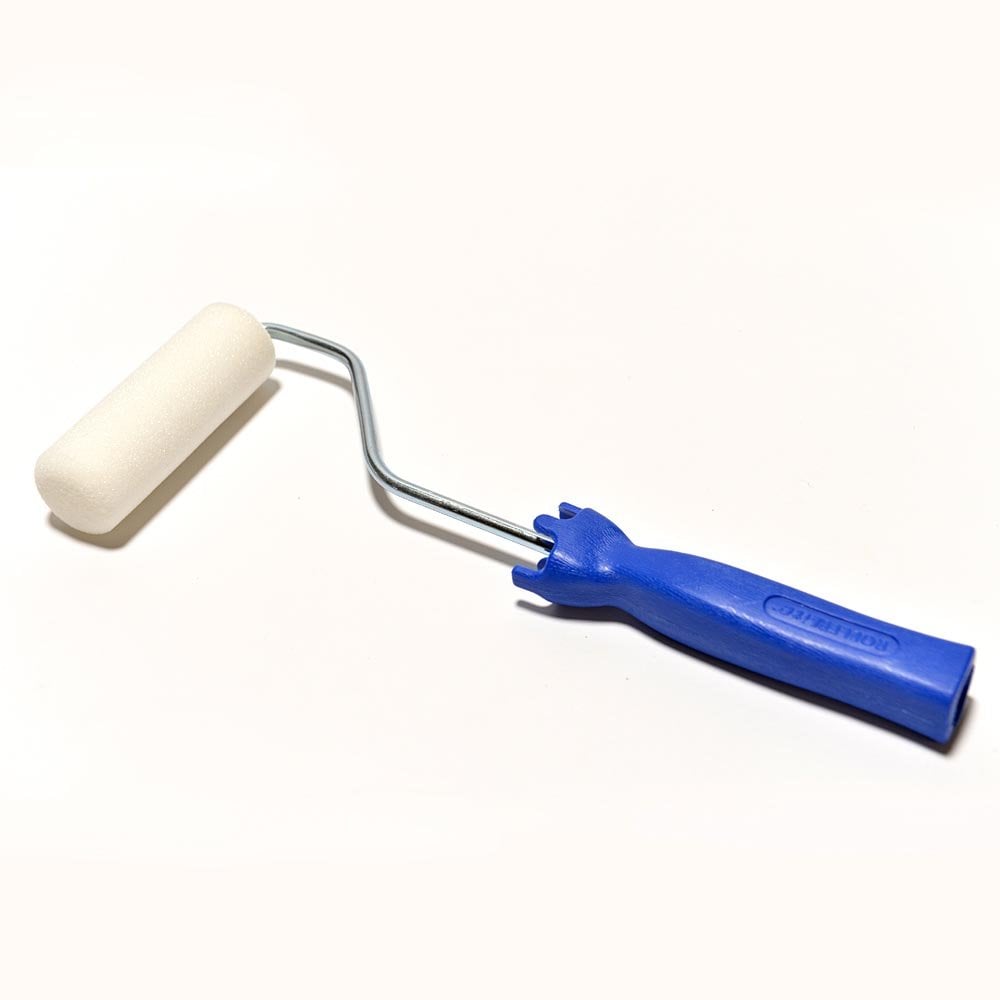
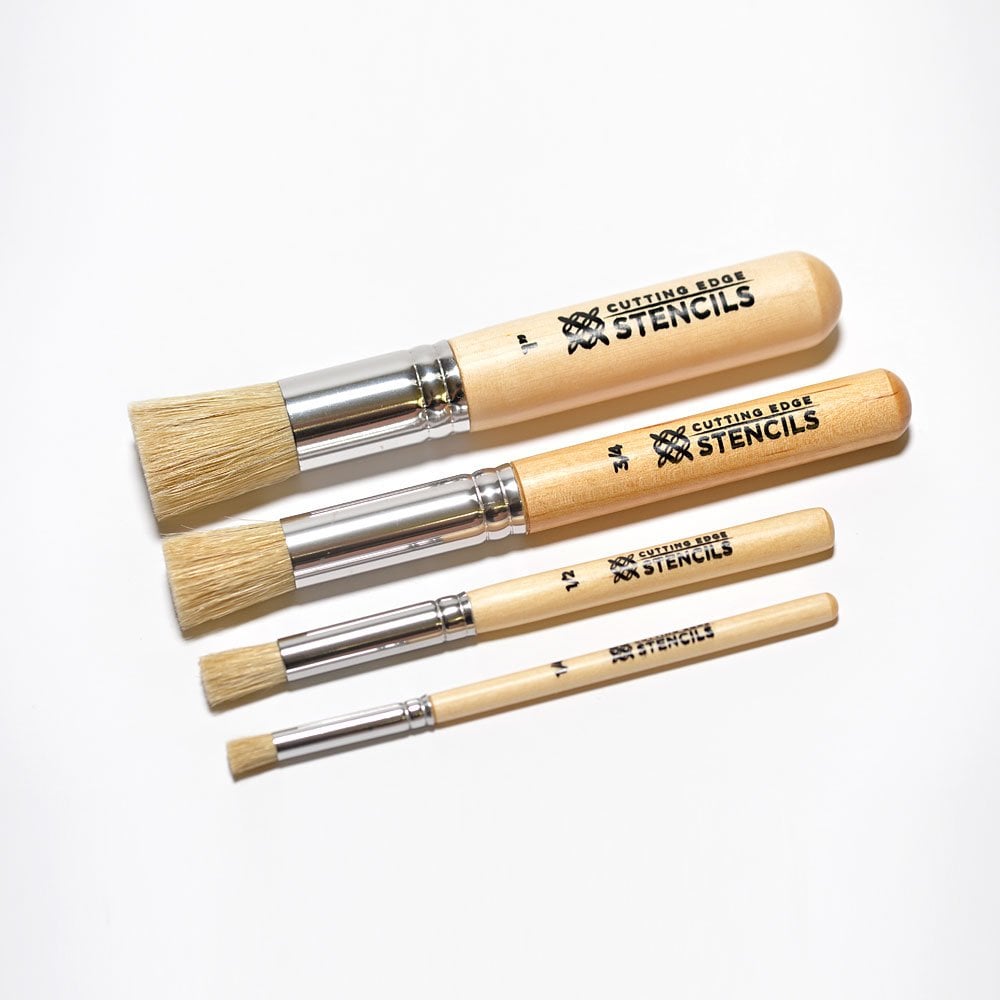
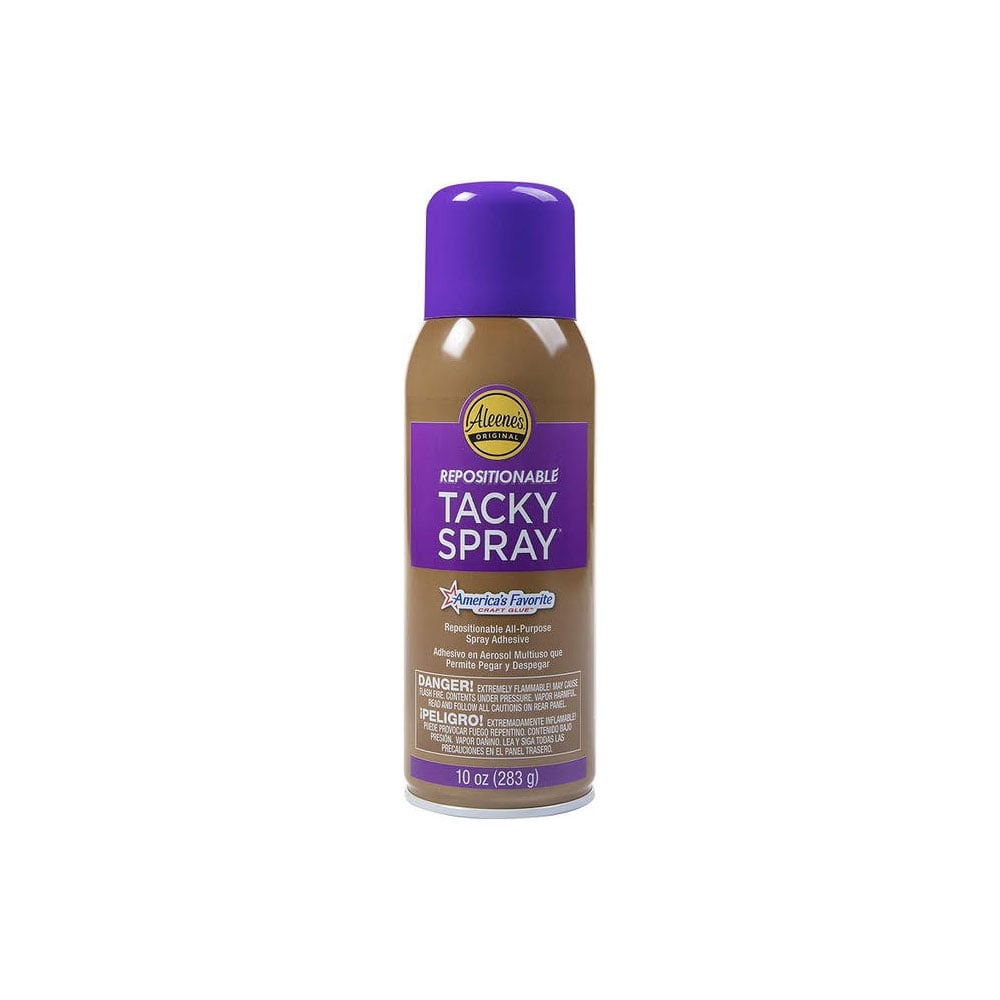
Which stencil paint to use? You can stencil with acrylic or latex paint, stencil creams, glaze, etc. It's best to have your walls painted in flat latex paint as it makes a perfect base coat for stenciling. For stenciling on existing tile floors or cement floor, first use Stix adhesive primer as your base coat, tinted to the color of your choice and then stencil with latex or acrylics as usual. Protect with acrylic varnish after your stenciled tiles have dried. We do not recommend oil paint or spray paint for stenciling. Use a dense foam roller or stencil brush. If you want nice crisp edges, using spray adhesive may be very helpful (Elmer's seems to be the best) to ensure minimal bleed.
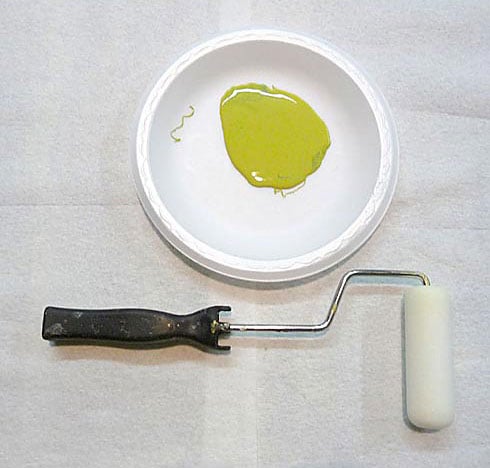
The main rule of stenciling is to use less paint! Please take care not to over-load your roller or brush with paint and not to press hard on a roller while stenciling. Always blot off the extra paint onto a folded paper towel before rolling over the stencil.
Make sure you watch our short step-by-step Video Tutorials! You'll find them extremely helpful for your stenciling project.
About seepage and imperfections: Even with a proper loaded roller and correct technique you might get some minor paint seepage here and there. In most cases it's not noticeable, especially from a couple of feet away and it can be easily touched up with a small brush. Don't forget that you're creating a "hand-painted finish". A few imperfections and some paint seepage here and there are natural and inevitable for this type of work. To avoid seepage, use spray adhesive and less paint on your roller and brush.
Our stencils are made to last and with proper care and storage will serve you for long time.