
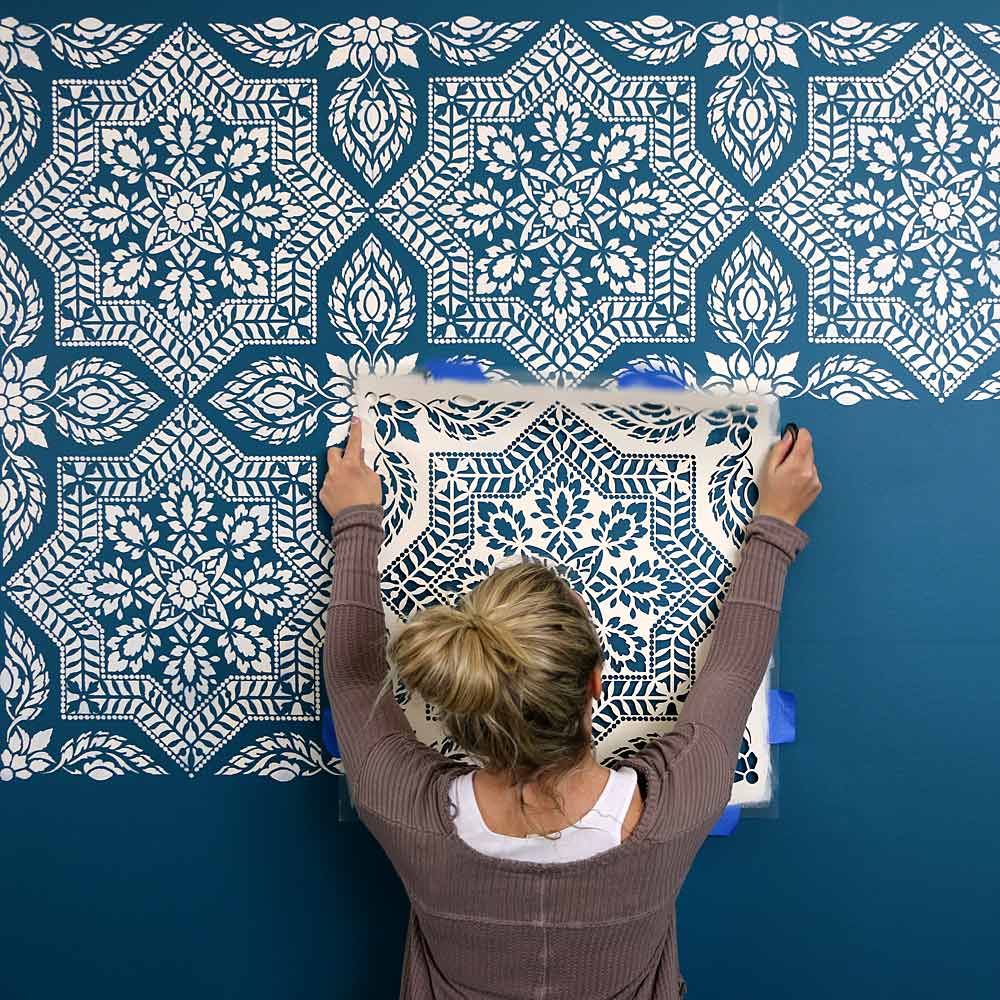


Multi-Color Stenciling: How To Stencil With Multiple Colors Using A Roller & Brush


What You’ll Need
-
Stencil paint (acrylic or latex)
-
Base coat paint (for touch-ups)
-
Low-tack painter’s tape
-
Dense foam mini rollers (one per color)
-
Stencil brushes (one per color)
-
Paint tray or paper plate
-
Paper towels
Stencil Paint
Use high-quality acrylic or latex paint; craft acrylics also perform well. Avoid spray and oil-based paints due to control issues. Metallics, glazes, and plaster can be used for decorative effects.
Shop for stencil supplies here.
How to Prepare
Preparing Your Surface
Stencil only on clean, smooth, repaired surfaces. Allow the base coat to dry for 24 hours before stenciling. Flat sheen paint produces crisp prints and easier touch-ups; higher sheens increase bleed risk. Textured walls are not recommended. Spray adhesive is optional but helpful for delicate designs or ceilings.
Furniture: repair, lightly sand, clean with denatured alcohol, prime, and basecoat with flat latex paint.
Floors: clean thoroughly, prime with an adhesive primer, and apply a flat latex base coat.
Primer
Fill repairs, sand with fine (220) sandpaper, remove dust, and spot-prime with water-based drywall primer to ensure strong adhesion and prevent tape lift.
Base Paint
Apply a flat, water-based base coat with a tight-nap roller for a smooth surface. Flat finishes reduce bleed and simplify touch-ups.
Masking
Use low-tack painter’s tape and avoid masking over fresh paint. Mask adjacent surfaces, burnish tape edges, and remove tape slowly at an angle.
Choosing Colors
Select palettes that complement existing décor and test combinations beforehand using swatches or a sample board.

Step-by-Step Stenciling Guide
Positioning Your Stencil
Interlocking patterns:
Start near the ceiling in an unobstructed area and complete a full column first. Tape the stencil flat beside the ceiling line (do not bend into the crease). Use registration marks to extend the pattern.
Single motifs:
Position by eye or level as needed and secure with low-tack tape. Organic designs can be placed freely. For ceilings, combine tape with spray adhesive.

Applying the Paint: Brush vs Roller
Both tools work well, often in combination. Keep these tips in mind to avoid confusion: Match tool size to stencil openings. Use one tool per color to avoid contamination. Begin with lighter colors first. Rollers provide speed; brushes allow detail, shading, and blending.
Stenciling With a Dense Foam Roller
-
Evenly load the roller with paint.
-
Offload excess onto paper towels until nearly dry.
-
Apply light passes, gradually building coverage.
-
Lift a stencil corner periodically to check coverage.
-
Reposition and repeat, reloading and offloading as needed.
Minimal paint and light pressure produce the cleanest results.
Stenciling With a Brush
Stencil brushes are ideal for detail, shading, and blending.
-
Select brush size based on stencil openings
-
Dip only the tip into paint and offload excess
-
Use pouncing for coverage
-
Swirl lightly for shading or blending (dry-brush technique)
-
Add darker tones along edges for dimension
-
Avoid sweeping strokes that push paint under the stencil
Stenciling Around Moldings & Edges
Mask moldings, bend the stencil into creases, roll into the edge, and refine with a stencil brush.
Stenciling Corners
Mask the adjacent wall and secure the stencil on the working side only. Roll into the corner, detail with a brush, then align and continue onto the next wall after taping off the completed surface.
Clean Up
Clean tools promptly. Avoid soaking stencil brushes for extended periods. If pausing, seal tools in plastic or cover with a damp cloth. Stencils typically require cleaning only after paint buildup appears (often 10–15 repeats).
To clean:
-
Lay flat
-
Spray with water and gently scrub
-
Soak if the paint is dry
-
Pat dry with paper towels
Adhesive residue can be removed with stencil-safe remover. Properly maintained stencils last for years.
Stencil Storage
Store stencils flat between sheets of paper or cardboard to maintain shape.
Additional Tips & Tricks
Sample Test
Practice on a sample board before starting. Testing helps refine technique, evaluate lighting effects, and confirm color combinations.

Using Spray Adhesive
Spray adhesive improves edge crispness but is optional. Apply a light coat to the stencil back, allow it to dry briefly, and reapply as needed.
About Paint Bleed
Minor bleed is normal, but can be minimized:
-
Use flat base and stencil paints
-
Work on smooth surfaces
-
Keep tools nearly dry
-
Build paint gradually
-
Use spray adhesive for sharper edges
Fresh mistakes can be wiped away; dried ones can be touched up and re-stenciled.
Ready to Stencil? Get Started with Cutting Edge Stencils Now
Multi-color stenciling opens the door to layered, custom designs across walls, furniture, and floors. Follow these guidelines, work patiently, and you’ll quickly build confidence and skill. Our “How to Stencil” videos provide great visual guidance, and our blogs offer more detail.